
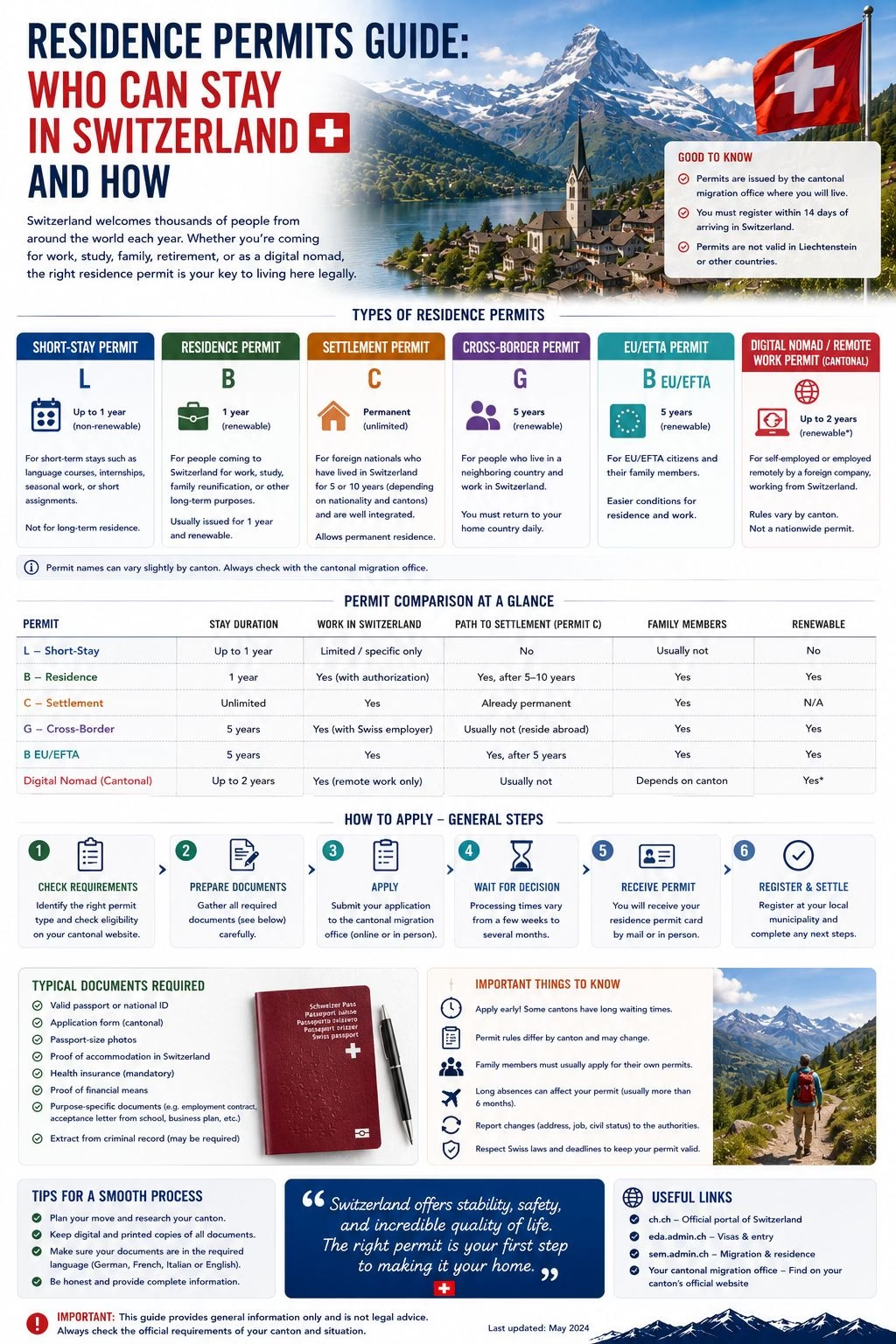
Switzerland’s residence permit system is the practical follow-on from the 90-day Schengen tourism limit covered in the Visa and Entry Requirements guide: anyone planning to stay longer than 90 days needs a specific legal basis and the corresponding permit, and the process and requirements differ substantially depending on nationality and the reason for the stay. This is genuinely one of the more complex parts of relocating to Switzerland, and it’s worth approaching with realistic expectations about timelines and paperwork rather than assuming it will move quickly.
EU and EEA Citizens: Free Movement
EU and EEA citizens have the right to live, work, and remain in Switzerland under the Bilateral Agreements between Switzerland and the EU, specifically the Agreement on the Free Movement of Persons. This is a substantially stronger right than the immigration process available to non-EU/EEA nationals: EU/EEA citizens can move to Switzerland to seek employment (with a right to remain for a defined search period even without a confirmed job in hand), take up a confirmed job, become self-employed, or in some circumstances establish residence without employment, and the permit process is comparatively straightforward, primarily a matter of registering with the local authorities (the Anmeldung process, covered in the Living in Zürich guide) rather than seeking prior approval for the move itself.
This right extends to family members of EU/EEA citizens as well, including non-EU/EEA family members in many cases, under family reunification provisions attached to the same Bilateral Agreements. This is a detail that’s easy to miss and worth checking specifically if it applies to your situation.
The Main Permit Categories
Switzerland’s permit system uses a small number of standard categories, referred to by letter, and understanding which one applies to your situation is the first practical step in the whole process:
- Permit L (short-term residence): typically tied to a fixed-term work contract or specific short-term purpose, generally valid up to one year and tied to the duration of the underlying activity, sometimes renewable if the underlying contract is extended.
- Permit B (initial residence permit): the standard permit for employment, family reunification, or study, usually issued for one year and renewable as long as the underlying basis for the permit continues. This is the permit most new long-term arrivals will hold for their first several years.
- Permit C (settlement permit): a permanent residence permit, generally available after five years of continuous B permit residence for some nationalities (including US and Canadian citizens specifically) and ten years for others, granting broadly equivalent rights to Swiss citizens in most day-to-day respects except voting and standing for office. Applying also generally requires demonstrating A2-level proficiency in the local language and financial self-sufficiency.
- Permit G (cross-border commuter): for people who work in Switzerland but maintain their primary residence in a neighbouring country (Germany, France, Italy, Austria, or Liechtenstein), commuting across the border regularly rather than relocating fully. Renewable every five years.
Non-EU/EEA Nationals: A Narrower Path
One further category worth knowing: Permit F (provisionally admitted foreigners) applies to people who have been ordered to leave Switzerland but cannot do so for legal or humanitarian reasons. It grants temporary residence and the right to work, with more restrictions than the standard categories above, and is not a route anyone would apply for by choice.
For non-EU/EEA nationals, Switzerland operates a quota system for work-based permits, and the requirements are meaningfully stricter: typically a confirmed job offer from a Swiss employer who has demonstrated that the position couldn’t reasonably be filled by a Swiss or EU/EEA candidate (a labour-market test the employer, not the applicant, is responsible for satisfying), along with the relevant qualifications for the role, usually a university degree or equivalent specialist experience for the higher-skilled roles the quota system tends to favour.
Self-employment permits exist as a separate, more involved pathway, generally requiring a viable business plan and evidence of sufficient capital, assessed canton by canton. Some cantons are noticeably more receptive to this route than others, and the assessment criteria aren’t fully standardised nationally. Family reunification and, for some nationalities and circumstances, financially-independent-resident categories (sometimes used by retirees with substantial means) are the other realistic routes for non-EU/EEA nationals without a Swiss job offer.
The Practical Process and Timelines
The permit application itself is typically initiated either by a Swiss employer (for work-based permits) or directly with the cantonal migration office (for other categories), and processing times vary significantly by canton and by permit type: a matter of weeks in straightforward EU/EEA cases, considerably longer for non-EU/EEA work permits subject to quota and labour-market testing, sometimes several months in total once the employer-side documentation and the quota allocation timing are both accounted for. Where a separate entry visa is required before travel (a Type D long-stay visa, for stays over 90 days), processing typically takes 4 to 12 weeks, with a visa fee generally in the CHF 60 to 100 range.
Once a permit is granted, the same municipal registration (Anmeldung) required of everyone applies, along with the mandatory health insurance enrolment within three months, covered in the Healthcare for Expats guide. It’s worth treating the permit approval as the start of a checklist rather than the end of the process: registration, insurance, and often opening a Swiss bank account all follow in short order.
Setting Up as Self-Employed
Once a self-employment permit is granted, the most common legal structure for an individual freelancer is a sole proprietorship (raison individuelle), registered with the cantonal commercial registry; registration fees and the exact process vary by canton. Alongside this, freelancers must register with the Swiss social security system and pay AHV/IV/EO contributions (the old-age, disability, and loss-of-earnings insurance that funds Switzerland’s state pension system), calculated as a percentage of declared income. Accident insurance is mandatory; unemployment insurance is generally voluntary for the self-employed but worth considering. This registration is separate from, and comes after, the residence permit itself, and is worth budgeting time for as part of the overall setup process.
Where to Get Authoritative, Current Information
This is genuinely one of the more complex parts of a Switzerland relocation, and the specific requirements shift based on nationality, canton, and individual circumstances. Permit quotas and specific requirements are also subject to periodic policy change. The Staatssekretariat für Migration (SEM, sem.admin.ch) is the authoritative source for current requirements, and for non-straightforward cases, consulting an immigration lawyer or your employer’s relocation support (where available) is worth the cost given how much can hinge on getting the initial application right.
Related: Digital Nomad Guide | Cost of Living | Healthcare for Expats | Visa and Entry Requirements
Written by Laura Meier. Updated regularly as prices and conditions change. Corrections and updates are welcome at contact@allaboutswiss.com.