
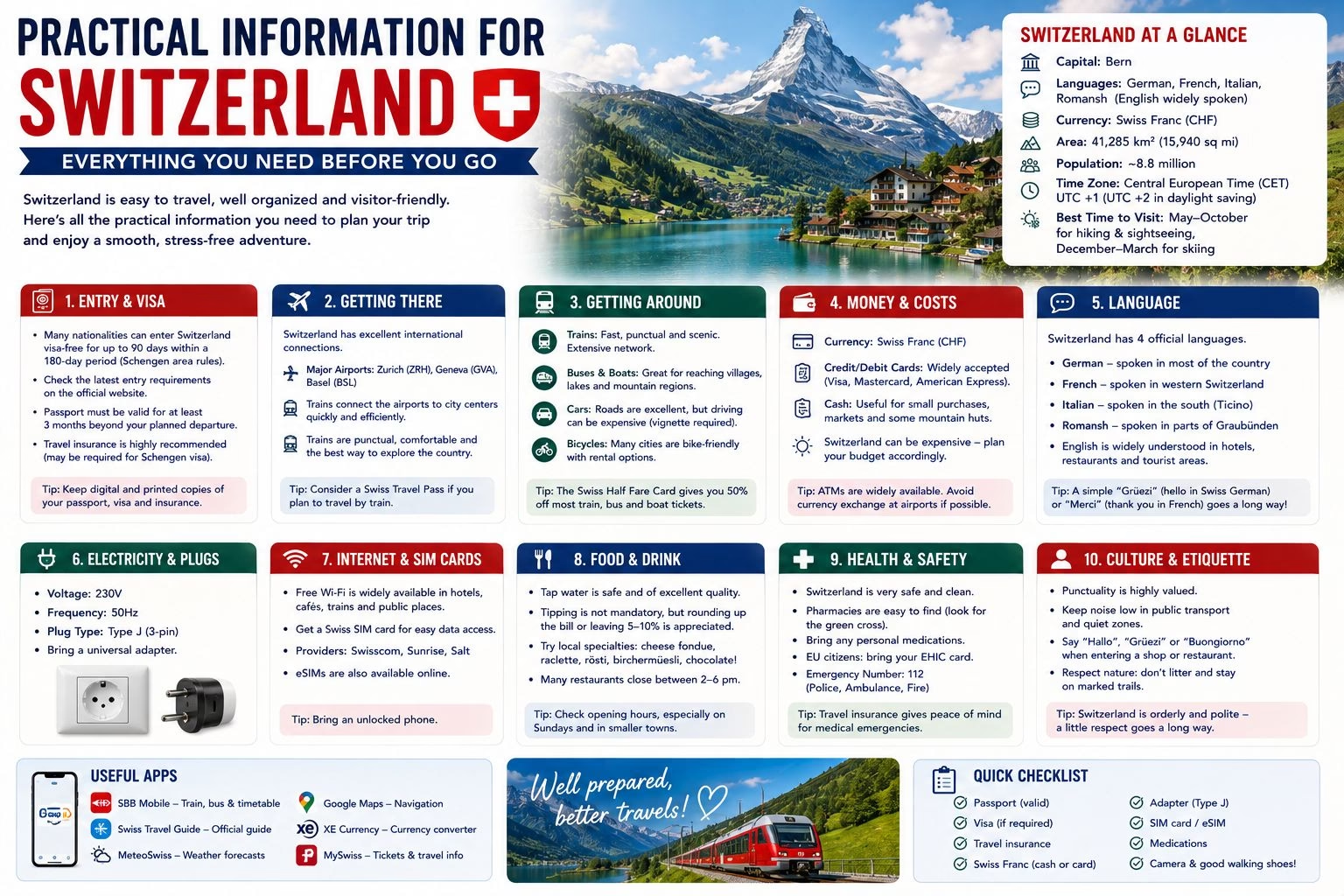
Switzerland’s practical specifics are worth understanding in detail because the country is expensive enough that getting them wrong costs real money, and its infrastructure is sophisticated enough that using it correctly provides exceptional value. The Swiss Travel Pass question alone can save or cost hundreds of francs; understanding the tipping culture prevents awkward restaurant bills; knowing the language geography prevents confusion about which language to attempt where.
This section covers the practical information that most directly affects the quality of a Switzerland visit: transport, money, culture, language, safety, and the specific mountain safety awareness that Alpine travel requires.
Quick Essentials
- Currency: Swiss Franc (CHF). Switzerland is not in the eurozone; cards are accepted almost everywhere.
- Entry: Switzerland is part of the Schengen Area but not the EU. See our visa and entry requirements guide.
- Plugs and power: 230 volts. Swiss sockets (Type J) take the slim two-pin Europlug (Type C), but the thicker round plugs used in Germany and France usually do not fit, so bring a Swiss adapter.
- Mobile data: Because Switzerland is not in the EU, EU roaming rules do not automatically apply. Check your plan before you travel, or use an eSIM or a Swiss prepaid SIM (you will need ID to buy one).
- Emergency numbers: 112 for all emergencies, 144 for an ambulance, 117 for police, 1414 for mountain rescue. More in our safety guide.
- Tap water: Safe and excellent everywhere, including most public fountains.
- Opening hours: Most shops close on Sundays and public holidays. Shops at larger railway stations and airports stay open, which is where locals do Sunday shopping.
- Tipping: Service is included in prices; rounding up is appreciated but never required. See our culture and etiquette guide.
The Swiss Travel Pass: Start Here
The most financially significant practical decision for most Switzerland visitors is the transport question. The Swiss Travel Pass guide covers this in detail: which pass types exist, what they include, when they provide genuine value versus when point-to-point tickets are cheaper, and the calculation framework for your specific itinerary.
The short answer: the pass pays off for trips with several long rail journeys, boat trips, and city transport on most days. For visitors staying primarily in one city or making only two or three journeys, point-to-point tickets (especially Supersaver fares booked early) are cheaper. The calculation is worth doing before booking anything.
Money and Cost
Switzerland uses the Swiss Franc (CHF). The Swiss Franc is one of the world’s strongest currencies; the practical implication is that Swiss prices, which are high in local terms, are further elevated when converted from most visitor currencies.
Current cost context: a standard restaurant meal (one course plus drink) costs CHF 25 to 45 in most cities; a coffee costs CHF 4 to 6; a city centre hotel night costs CHF 180 to 300. These prices should be built into the trip budget rather than treated as a surprise on arrival.
The money and currency guide covers ATMs, card acceptance, cash management, and the specific Swiss payment culture, and our Switzerland travel costs guide gives price benchmarks for a whole trip.
Language: The Four-Language Reality
Switzerland has four national languages (German, French, Italian, Romansh). The city you visit determines which language you will hear: Zürich, Bern, Basel, and Lucerne are German-speaking; Geneva and Lausanne are French-speaking; Lugano is Italian-speaking. English is widely spoken in tourist areas and international contexts throughout.
For practical purposes in the major tourist cities and on the SBB rail network, English is sufficient for all navigation. In German-speaking Switzerland, everyday conversation is in Swiss German dialects (Züritüütsch, Bärndütsch, Baseldytsch), which are quite different from Standard German; Swiss people switch to Standard German (Hochdeutsch) or English when talking with visitors. The language guide covers what you actually need to know.
Safety
Switzerland is one of the safest countries in the world for visitors. The main risks are petty theft in busy stations, and above all the outdoors: mountain weather, steep trails, and cold, fast-flowing water. The safety guide covers crime, emergency numbers, health care, and the rules that can catch visitors out.
Mountain Safety
Switzerland’s Alps are beautiful and require specific safety awareness. The mountain safety guide and mountain weather checklist cover the specific requirements for safe Alpine activity: understanding the trail rating system, recognising dangerous weather conditions, the specific Swiss mountain emergency services, and the practical safety kit for different levels of Alpine activity.
What Is in This Section
- Swiss Travel Pass: the complete guide ★ Start here
- Getting around Switzerland: rail, bus, boat, and driving
- SBB trains and Swiss rail: how the railway system works
- Swiss Franc, ATMs, and costs
- Swiss culture and etiquette
- Languages in Switzerland
- Safety, emergencies, and health
- Mountain safety guide
- Mountain weather checklist
Further Reading and Planning Resources
This guide is part of the complete allaboutswiss.com Switzerland resource. Browse the full collection: Plan Your Trip | Destinations | Things To Do | Winter and Skiing | Practical Info | Expat and Nomad
Switzerland rewards visitors who come prepared: the train system is more rewarding when you know how to use it, the mountain access is more meaningful when you understand the trail grades, and the trip is more affordable when the Swiss Travel Pass calculation has been done properly. Every guide on this site aims to provide the specific information that makes the difference between a good Switzerland trip and an exceptional one.
Written by Laura Meier. Updated regularly as prices and conditions change. Corrections and updates are welcome at contact@allaboutswiss.com.