
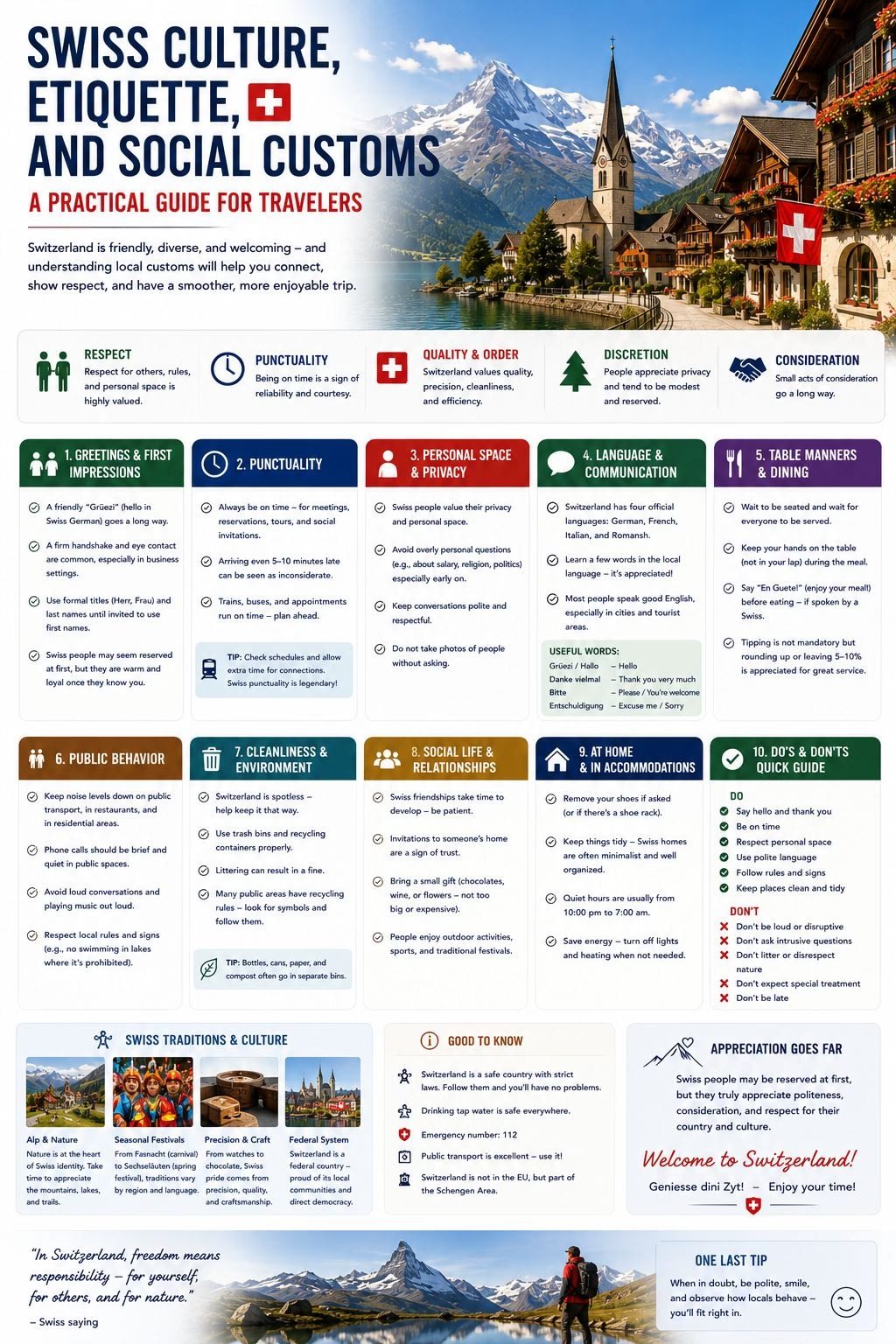
Swiss culture is specific and occasionally surprising to visitors who arrive expecting an efficient but otherwise ordinary Western European experience. The famous Swiss punctuality is real and has practical consequences. The social formality is different from North American, British, or Southern European norms. And the intersection of four distinct national cultures within one small country creates an internal diversity that visitors who have time to notice it find one of Switzerland’s most interesting characteristics.
Swiss Punctuality: The Reality
Swiss punctuality is not a myth or a cultural stereotype: it is a social norm with real consequences. Being late for an appointment (personal or professional) is considered disrespectful rather than casual; apologies are expected but lateness is still noted. The SBB’s train punctuality record (approximately 92 to 94 percent of trains arriving within 3 minutes of schedule) reflects the same cultural expectation applied institutionally.
For visitors, the practical implication: if you have made a reservation (restaurant, guided tour, appointment), arrive on time or send advance notice if delayed. The difference between Swiss and Mediterranean or British punctuality norms can create friction if not understood.
Noise and Quiet Hours (Ruhezeit)
Switzerland has specific and enforceable noise regulations. Sunday is a general day of quiet throughout Switzerland: loud activities (using power tools, mowing lawns, vacuuming in apartment buildings) are prohibited on Sundays and on public holidays. The practical implications for visitors: do not make loud noise in apartment buildings or residential areas late at night (typically after 10pm); be aware that Sunday in Switzerland has a specific quietness that is cultural rather than just commercial.
Greeting Culture
In German-speaking Switzerland, greetings are taken seriously and skipping them is considered rude. Upon entering a small shop, bakery, or medical practice, greeting the person behind the counter (Grüezi in Swiss German; Grüezi wohl as the slightly more formal version) is standard; failing to do so is noticed. The shake-hand greeting is standard in professional and first-meeting contexts; the three-kiss greeting (right-left-right) is used among friends and social acquaintances in German-speaking Switzerland as well as in the French-speaking Romandie (where it is more universal).
Recycling and Waste
Switzerland has one of the most developed recycling systems in the world and takes it seriously at the cultural level. Garbage bags in Switzerland require the purchase of the cantonal tax-bearing garbage bag (Kehrichtsack); putting waste in non-official bags or leaving waste outside designated collection points is both illegal and considered antisocial. Most hotels and accommodation manage this for guests; visitors in self-catering accommodation should check the local recycling requirements.
Recycling collection points (for glass, PET plastic, aluminium, cardboard, batteries) are present throughout Swiss cities and are used by the population. Using them is both expected and environmentally appropriate.
Tipping in Restaurants
Tipping at 5 to 10 percent for good restaurant service is standard; not tipping for bad service is also socially accepted in Switzerland to a degree that would be unusual in other countries. The tip is typically given in cash at the end of the meal; saying the total you wish to pay when the server brings the card machine or cash accepts the rounding.
The Four Languages in Practice
Switzerland’s linguistic diversity produces specific social norms. Swiss people typically switch language when speaking with someone from a different linguistic region: a Zürich German speaker and a Geneva French speaker will often speak in English with each other rather than forcing one to speak the other’s language at a disadvantage. English serves as the lingua franca between language regions and between Swiss people and foreigners.
In German-speaking Switzerland, Swiss German (dialect) is used for everyday conversation; Standard German (Hochdeutsch) is used for writing and for speaking with non-Swiss-German speakers. If you speak German, Swiss people will switch to Standard German for you.
Related: Languages Guide | Money and Tipping | Practical Info Hub | Plan Your Trip
Written by Laura Meier from Zürich, based on nearly a decade of Swiss residence and ongoing direct experience of the places, trails, trains, and bureaucratic processes described. Updated regularly as prices and conditions change — corrections and updates welcome at contact@allaboutswiss.com.