
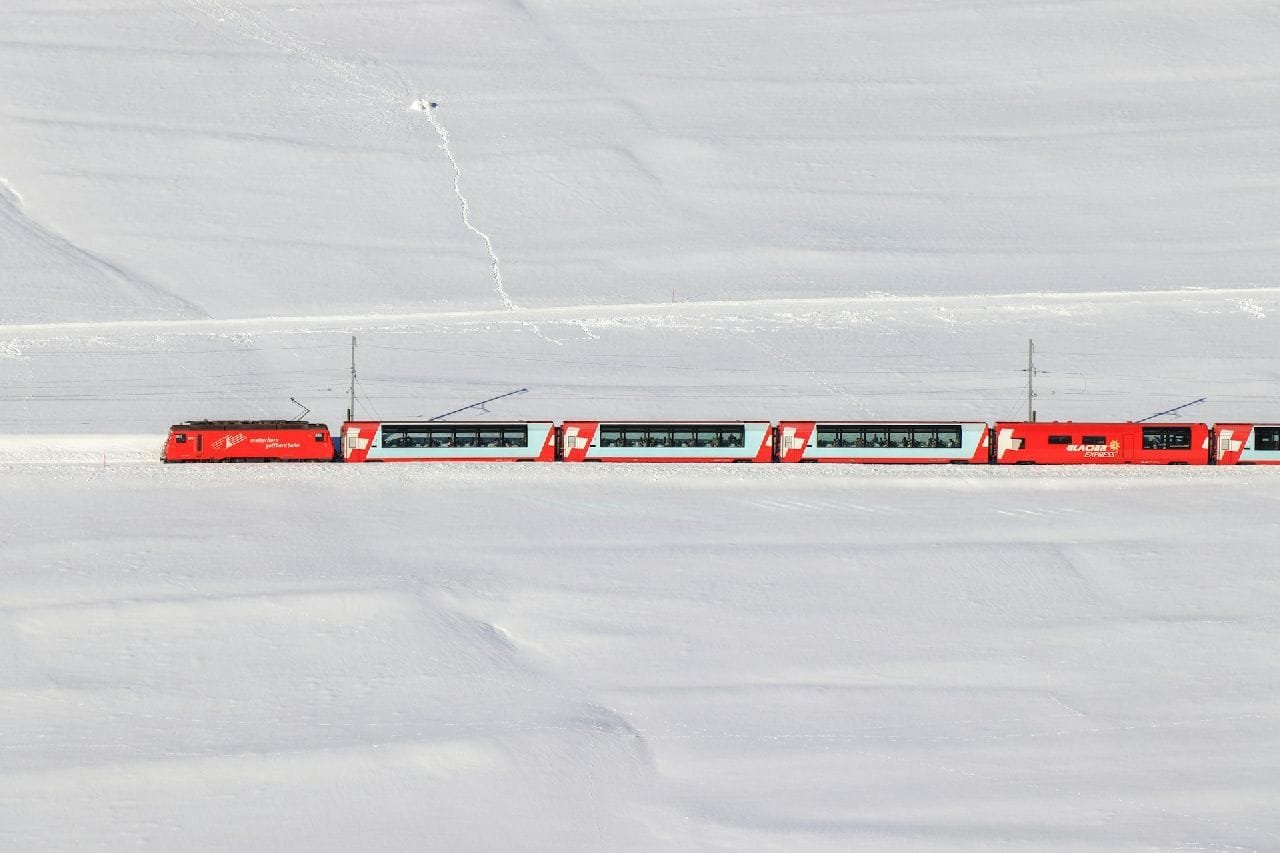
Quick answer: The Glacier Express suits a solo traveler well. You get a reserved seat with a panoramic window, no driving or navigation to worry about, and a long, slow day with plenty of time to read or watch the scenery. The main things to plan are the seat reservation, the class you want, and whether the full journey is worth the cost compared with a regular scenic train.
The journey at a glance
| Question | Short answer |
|---|---|
| Route | Zermatt to St. Moritz (or the reverse), with other stops along the way. |
| Duration | About eight hours for the full route. Pack food and a charger. |
| Tickets | A normal rail ticket or pass, plus a compulsory seat reservation. The reservation fee varies by class and season, so check the official site. |
| Season | Runs most of the year but typically pauses for some weeks in late autumn. Check current timetables. |
| Best for | Anyone who wants a relaxed, scenic day without logistics. |
Why it works well solo
- Your own window: a reserved seat with a panoramic view means no negotiating for a good spot.
- Your own pace: you can read, journal, photograph or just watch the landscape without needing to entertain anyone.
- No planning on the day: there is nothing to navigate once you are on board.
Booking and planning
Tickets and reservations
The train needs a seat reservation on top of your rail ticket or Swiss Travel Pass. Popular dates sell out, so reserve early for summer weekends. Use the official operators or an authorized seller, and check the cancellation rules before you pay. Our Swiss Travel Pass guide explains how passes interact with panoramic train reservations.
Choosing a class
Second class is the cheapest and still has panoramic windows. First class has more space, and an Excellence Class option adds a higher level of service at a much higher price. Meals can usually be pre-booked and served at your seat, but what is included depends on your class, so check the details when booking.
Where to start
Most people start from Zermatt or St. Moritz and spend a night at each end. If you are short on time, you can ride one section rather than the full route, and you can usually break the journey at stations along the way.
What to expect on board
The train is slow by design, and the highlight is the scenery rather than speed. Notable moments include the Landwasser Viaduct and the high alpine sections of the route. An audio guide is part of the experience, but check what is offered for your class and booking.
Tips for traveling alone
- Bring food and water: the journey is long and on-board options depend on your booking.
- Keep valuables with you: keep a small bag at your seat and use luggage areas sensibly.
- Layers: weather can change along the route, and stations at altitude are cold.
- Connections: if you are joining or leaving the route at a station, leave generous time for connections. Check the live timetable in the SBB app. See our SBB train guide.
- Company: a window seat is great for quiet, and if you want conversation the dining areas and station stops are the easiest places to chat.
Cheaper alternatives
You do not have to take the Glacier Express to see the Alps by train. Regular services on routes such as Interlaken to Zermatt (via Visp) or Zurich to St. Moritz, along with other panoramic routes, offer similar scenery without the reservation fees or the long day. A Swiss Travel Pass or regional pass can make these cheaper. Combining train rides with stops in towns such as Lucerne or Grindelwald also lets you add hikes, lakes and short boat trips. See our getting around guide.
Frequently asked questions
Is the Glacier Express worth it?
If scenic train travel is a priority, many visitors find it memorable. If you are on a tight budget, a regular train on a scenic route delivers much of the same view for less.
Can I get off along the way?
Generally yes, at designated stations. Check the rules for your ticket and reservation.
When is the best time to ride?
It depends on what you want: summer for green valleys, autumn for color, winter for snow. Check seasonal operating dates first.
Keep planning
- Matterhorn and Zermatt for solo travelers
- Switzerland itineraries by trip length
- Mountain weather guide
What to See Along the Way
The route crosses a large part of the Swiss Alps and is known for its viaducts, tunnels and mountain scenery. It climbs to the Oberalp Pass, the highest point on the line, and passes through the Rhine Gorge, sometimes called the Swiss Grand Canyon, as well as the Landwasser Viaduct, part of the UNESCO-listed Albula and Bernina railway lines. Windows are large, and the audio guide, where provided, explains what you are passing. Sit on the side recommended by the operator for the best views of the main sights, and keep your camera ready.
Food, Drink and Comfort
Meals are served at your seat in the higher classes, and you can usually choose between pre-booked meals and bringing your own food. If you bring snacks, check the operator’s current rules on outside food and drinks, and pack water. The journey is long, so wear comfortable clothes, bring a light layer because the carriage temperature can vary, and charge your phone and camera beforehand.
Photography Tips
- Clean windows can still reflect, so hold your phone or camera close to the glass and shade it with your hand or jacket.
- Use a fast shutter speed to avoid blur from the moving train.
- Take a few wide shots of the carriage interior and the passengers to add context to your photos.
- Do not lean out of any openable windows, and follow the crew’s instructions.
Delays, Weather and Backup Plans
Mountain weather and track maintenance can occasionally cause delays or changes. In winter, snow or avalanche risk can lead to temporary closures or replacement buses on some sections. Check the operator’s current status before you travel, and consider buying flexible tickets if you have onward connections. If you have a tight connection afterward, allow a generous buffer.
Is the Whole Route Right for You?
Some travelers find that a day of mostly seated travel is a highlight, while others prefer to break the trip into shorter sections with stops in places such as Chur, Andermatt or Disentis. If you are short on time, consider riding only the most scenic section and returning by a regular train. Our Swiss Travel Pass guide helps you decide how to pay for the journey.

I’m Laura, a travel writer based in Zürich, and Switzerland is the place I know better than anywhere else. I moved here 9 years ago and haven’t stopped exploring it since.
Over the past 9 years I’ve made 40+ trips across every Swiss canton — from the Italian-speaking south of Ticino to the remote valleys of Graubünden to the lake towns of Romandy. I speak German, French and English fluently, which means I can read the local newspapers, argue with train conductors, and actually understand what the mountain guide is telling you when the weather turns.
Switzerland is a deceptively complex destination: four languages, 26 cantons, wildly different regional cultures, and a transport network so intricate it takes years to properly understand. I write to demystify all of it — whether you’re planning your first visit to Zermatt, deciding between Zürich and Geneva for a city break, or figuring out how to live here as a digital nomad or remote worker.
I also cover Central Europe for travellers who want to venture beyond the obvious — particularly the Czech Republic, Austria and the Alpine arc connecting Switzerland to its neighbours.
All About Swiss is my home base, where I publish in-depth guides to Swiss travel, life and culture. If it involves Switzerland, I’ve probably written about it, or I’m about to.