
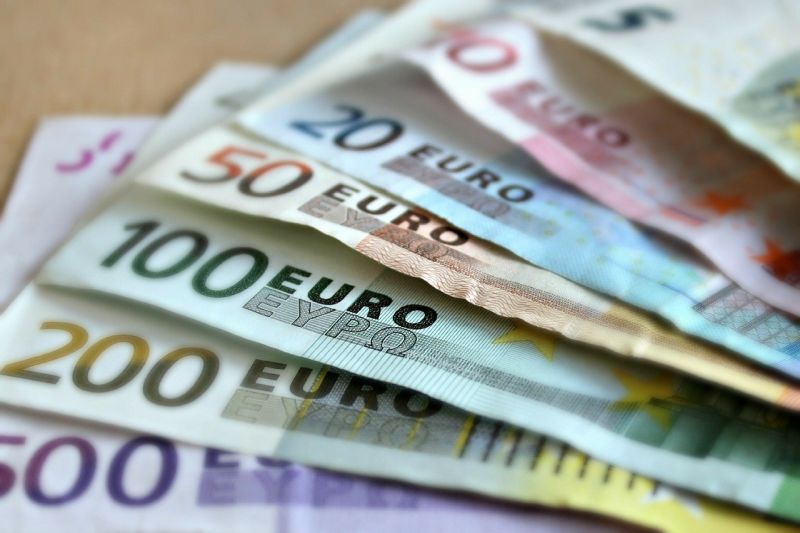
Money in Switzerland
Apart from breathtaking mountains, high-end watches, and chocolate, Switzerland is also famous for its banking system, which is one of the most developed in the world. Having said that, you will definitely have no problem with banks, ATMs, and money while visiting.
The official currency in Switzerland is the Swiss Franc (CHF) and its exchange rate is currently very close to Euro and US dollar – 1 CHF = 1.09 $US. This will make it easier to calculate prices if you are coming from Europe or the US.
Swiss Franc is the only currency accepted if you are paying cash and there is usually no exception to this rule. If you are planning to bring large amounts of cash of your own currency with you (which we never recommend for any destination), you might lose a lot during the exchange, as exchange offices at the airport or in hotels will rip you off with unfavorable rates. If you cannot escape bringing cash, exchange it in any bank downtown that offers favorable rates.
Cards, banks, and ATMs
We highly recommend using credit cards to pay any expense during your stay in Switzerland. You will certainly need some cash in Swiss Francs during your visit for some minor expenses, such as buying an ice cream while walking or purchasing some small souvenirs on the street. For this purpose, you should withdraw small amounts as needed from local ATM machines.
There are ATMs and banks on every corner and cash withdrawals are in Swiss Francs with a fee. Major banks don’t charge ATM fees to foreigners, but privately-operated ATMs may sometimes charge high fees. However, the machine should warn you about the charge, so you will have a choice to cancel the transaction before committing to it.
There are few ATMs that issue Euro or US dollars, but those are very rare.
Major credit cards are accepted almost everywhere, but please do check card charges from your bank in foreign countries before the trip.
The top banks in Switzerland are UBS, Credit Suisse, and Raiffeisen Swiss, based on size, capital, and the number of branches and ATMs. Other than these three, there are hundreds of banks in Switzerland to choose from.
Money transfers in Switzerland
In case of emergency and other reasons, you can use money transfer services throughout Switzerland, such as Western Union and MoneyGram. These are traditional money transfer services that are available almost everywhere in the world. We also recommend trying and using new services, such as Transferwise, which makes the transfer faster, cheaper, and more secure.
More info about banks, ATMs, and charges in Switzerland.

I’m Laura, a travel writer based in Zürich, and Switzerland is the place I know better than anywhere else. I moved here 9 years ago and haven’t stopped exploring it since.
Over the past 9 years I’ve made 40+ trips across every Swiss canton — from the Italian-speaking south of Ticino to the remote valleys of Graubünden to the lake towns of Romandy. I speak German, French and English fluently, which means I can read the local newspapers, argue with train conductors, and actually understand what the mountain guide is telling you when the weather turns.
Switzerland is a deceptively complex destination: four languages, 26 cantons, wildly different regional cultures, and a transport network so intricate it takes years to properly understand. I write to demystify all of it — whether you’re planning your first visit to Zermatt, deciding between Zürich and Geneva for a city break, or figuring out how to live here as a digital nomad or remote worker.
I also cover Central Europe for travellers who want to venture beyond the obvious — particularly the Czech Republic, Austria and the Alpine arc connecting Switzerland to its neighbours.
All About Swiss is my home base, where I publish in-depth guides to Swiss travel, life and culture. If it involves Switzerland, I’ve probably written about it, or I’m about to.