
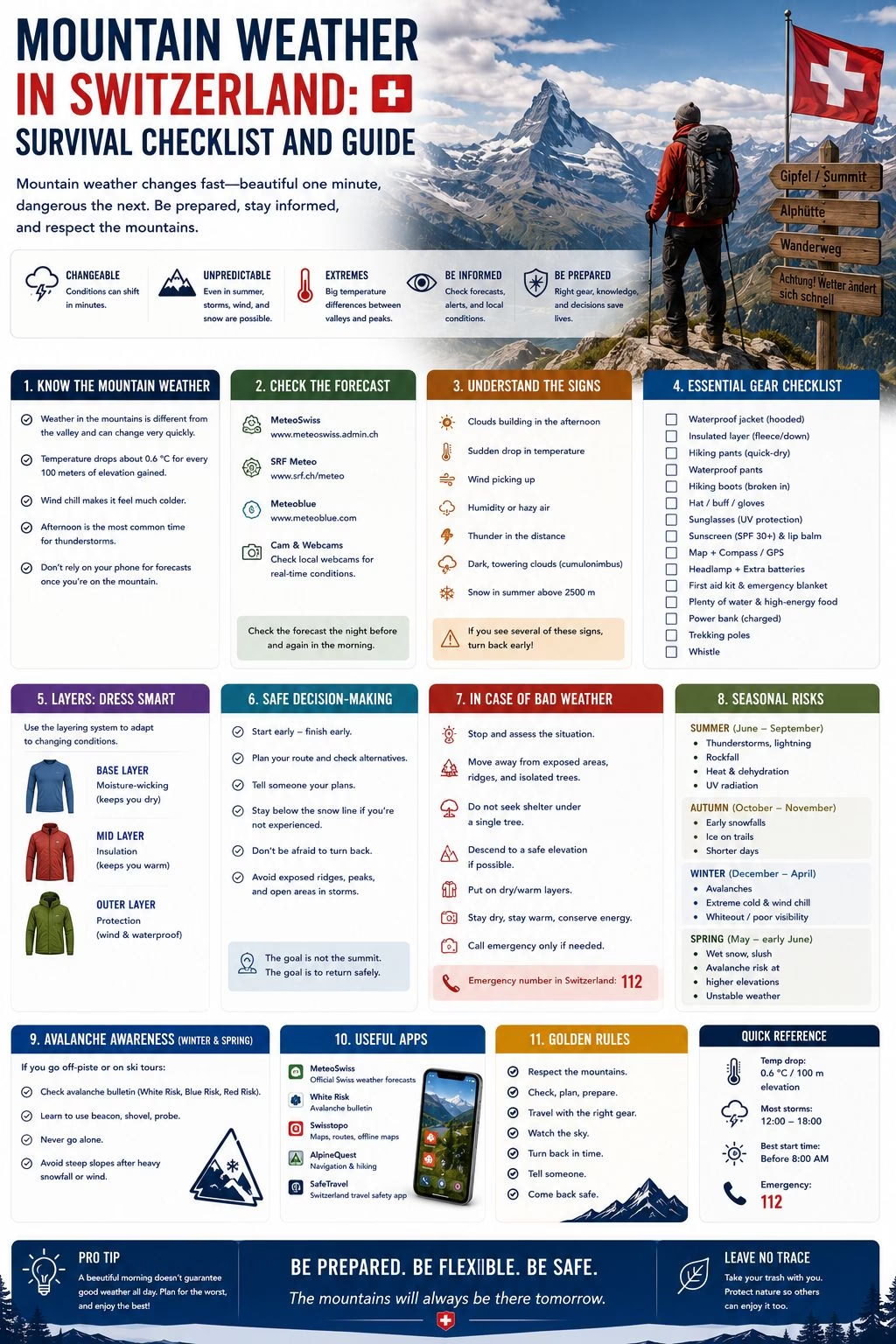
Mountain weather in Switzerland is the single most important safety variable for any outdoor activity above 1,500 metres. This checklist covers the preparation, the recognition, and the response to the weather conditions that produce the most mountain accidents in Switzerland.
Before You Set Out: The Weather Checklist
Check the MeteoSwiss forecast specifically for your altitude: The MeteoSwiss app and website (meteoswiss.admin.ch) provide forecasts by altitude zone (valley, 1,000 metres, 2,000 metres, summit). The valley forecast for Interlaken may show clear weather while the 2,000-metre forecast shows thunderstorm probability by afternoon. Always check the altitude-specific forecast.
Check the Bergbericht (mountain report): Available on the MeteoSwiss app and on the Swiss Alpine Club website; provides specific forecasts for mountain conditions including wind speed, temperature, and thunderstorm risk at summit level.
Check the trail status: The Schweizer Wanderwege (Swiss Hiking Federation) website provides current trail condition reports; some trails may be closed due to snow, ice, rockfall risk, or storm damage. Check current conditions on the day or the day before.
Know your descent options: Before starting any hike, identify the fastest route to lower altitude (ideally to the valley) from any point on the planned route. In an emergency, descending quickly is more important than completing the planned route.
Reading the Weather: What to Watch For
Cumulus to cumulonimbus development: Puffy white cumulus clouds in the morning are normal; if they grow vertically and develop anvil-shaped tops (cumulonimbus), this indicates thunderstorm development, typically completing within 30 to 90 minutes.
Wind direction change: In the Alps, a wind shift from south or southwest to northwest typically indicates a cold front approaching; weather often deteriorates within 2 to 6 hours.
Sudden temperature drop: A rapid fall in temperature, especially associated with increased wind, often precedes an incoming weather system.
Lenticular clouds on peaks: Lens-shaped clouds sitting on or above mountain peaks indicate strong upper winds; these may indicate deteriorating conditions at altitude even when valley weather appears good.
Thunderstorm Protocol
Thunderstorms in the Alps are the most dangerous weather event for hikers and the one most frequently underestimated. When a thunderstorm is developing or approaching:
- Descend to below the tree line or to a valley immediately; do not wait to see if it passes.
- Avoid ridge lines, summits, and any exposed high point; lightning strikes the highest point.
- Remove metal equipment (trekking poles, ice axes) and place it away from your body.
- Do not shelter under isolated trees; trees conduct lightning.
- If caught in the open: crouch with feet together (minimising ground contact area), away from any summit, ridge, or tall isolated object. Do not lie flat.
- Shelter in a valley-level building, mountain hut, or substantial shelter. Cable car stations and mountain huts on ridge lines are not safe during active lightning.
Cold and Hypothermia
Wind chill at altitude in the Swiss Alps can produce dangerous cooling conditions even in summer. A 20°C valley day with a 15 km/h wind at 2,500 metres can feel equivalent to 5 to 8°C; if wet from rain or sweat, the cooling effect is dramatically increased.
Prevention: carry a rain jacket at all times above 1,500 metres; change out of wet base layers at mountain huts if the opportunity arises.
Recognition: persistent shivering, slurred speech, confusion, and loss of coordination are signs of developing hypothermia.
Response: shelter from wind and rain; add all available insulation; provide hot drink if the person is conscious; call Rega (1414) if the person cannot be moved to shelter or symptoms are severe.
Related: Mountain Safety | Hiking in Switzerland | Packing Guide | Plan Your Trip
Written by Laura Meier. Updated regularly as prices and conditions change. Corrections and updates are welcome at contact@allaboutswiss.com.