
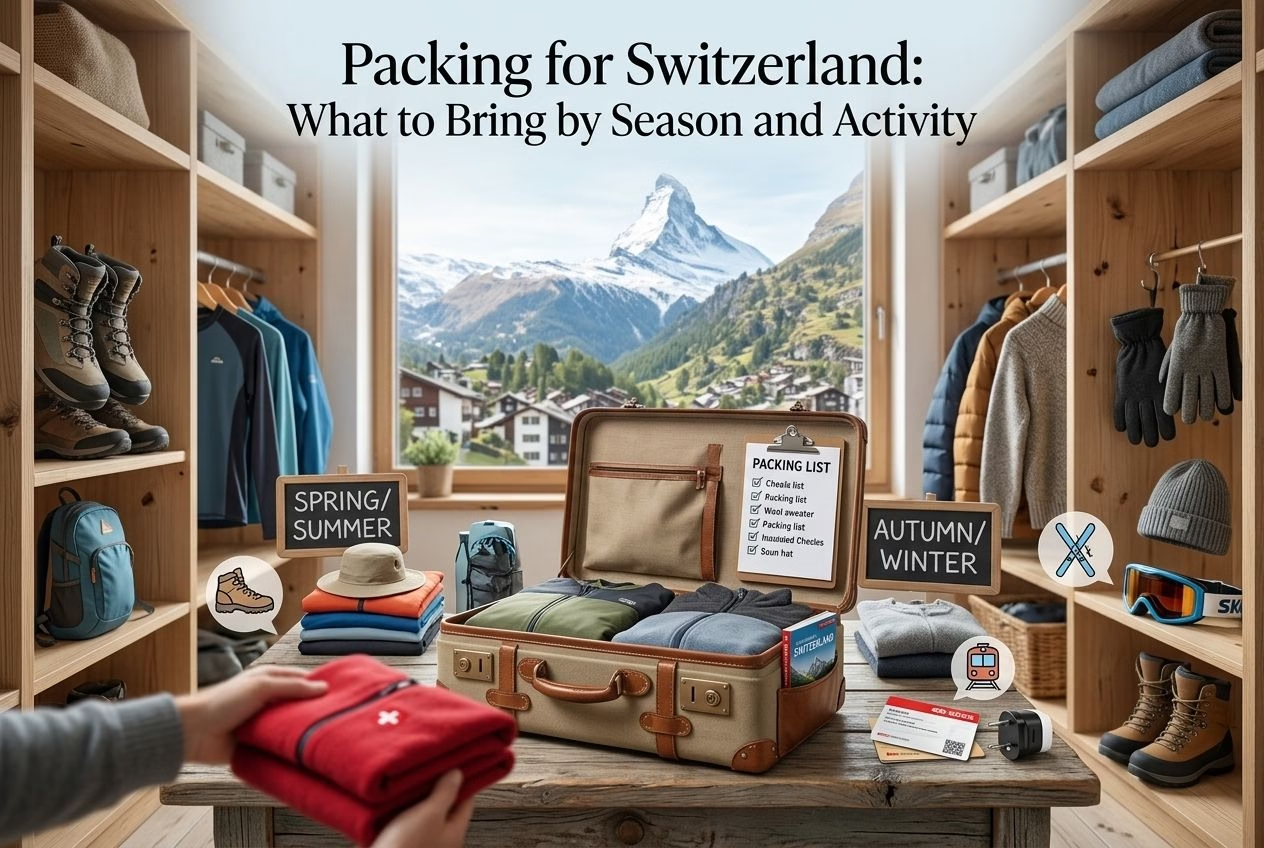
Switzerland has one of the most variable climates of any small European country, not because of weather instability but because of altitude. The bottom of a Swiss valley and the top of the mountain visible from it can be 25 degrees Celsius apart in temperature, with correspondingly different clothing requirements. A summer visitor who packs only for the lake cities and then attempts a Jungfraujoch visit in a t-shirt encounters conditions that require a warm mid-layer even in July. Getting the layering system right, and understanding which specific items Switzerland specifically requires, produces a significantly better experience.
The Swiss Plug Adapter: The Most Overlooked Item
Switzerland uses the Type J electrical socket: a three-pin socket with two round earth pins and one offset ground pin, unique to Switzerland and not compatible with the standard European two-pin Schuko plug used in Germany, Austria, and France. The Type J adapter is not the same as a standard continental European adapter.
Bring a Swiss-specific adapter or a universal travel adapter that includes Type J. They are not reliably available at Swiss airports or shops; arrive with one.
The Layering Principle for Alpine Switzerland
The fundamental principle: layers work; single heavy garments do not. The temperature swing between a summer morning in Zürich (20°C) and the Jungfraujoch summit (minus 5 to minus 10°C, year-round) is too large for any single garment to bridge. The solution is a base layer, a mid-layer, and a weatherproof outer layer that can be added and removed as altitude and weather change.
Base layer: A lightweight merino wool or synthetic base layer that regulates temperature and does not retain moisture. Cotton is not appropriate for mountain activities.
Mid-layer: A fleece or lightweight down insulating layer. Essential for any visit above 1,500 metres, year-round.
Outer layer: A lightweight packable waterproof jacket. Mountain weather in Switzerland can change from clear sunshine to rain in 20 minutes; a waterproof is not optional for any hiking or mountain activity.
Summer Packing (June to August)
For a trip combining city visits and mountain excursions:
Light summer clothing for city days (t-shirts, lightweight trousers or shorts, a light dress or summer skirt if preferred). Zürich, Geneva, and Lucerne reach 25 to 32°C in July and August; summer clothing appropriate for a warm European city applies.
A mid-layer for mountain visits and cool evenings. Even in July, an evening in Grindelwald (1,034 metres) can drop to 12°C.
A packable rain jacket, always. Swiss summer weather includes afternoon thunderstorms that appear quickly in mountain areas.
Walking shoes or trail shoes. The cobblestone streets of Swiss old towns and the well-maintained hiking trails both reward proper footwear. Sandals are fine for cities; closed shoes with grip are necessary for any hiking trail.
Sunscreen with a high SPF: UV radiation increases significantly with altitude, and the intensity of Alpine sun on snow or open ground is much higher than at lake level. UV protection is relevant even in summer on mountain visits.
Winter Packing (December to March)
For a city winter visit:
A warm coat appropriate for temperatures of minus 5 to 5°C in the lowland cities. The Mittelland can feel very cold due to high humidity; a down jacket or heavyweight wool coat is appropriate.
Layers underneath: thermal or merino base layer, fleece or knit mid-layer.
Waterproof boots: Swiss cities are well-gritted and shovelled, but wet streets and occasional snow are standard. Boots with a solid waterproof membrane are more comfortable than leather dress shoes in winter conditions.
For a ski trip, add:
Ski-specific kit (base layers, ski socks, buff/neck warmer, goggles, gloves). Much of this can be rented at ski resorts rather than transported from home.
The slope-to-town layer: ski resorts in Switzerland (particularly Zermatt, which is car-free and village-like) reward one smart-casual layer for evening meals and the aprés-ski scene.
Autumn Packing (September to October)
The season where the layering principle is most critical. Autumn hiking produces conditions ranging from warm (12 to 18°C at valley level in September) to genuinely cold (0 to 5°C at 2,000 metres in October with the first snow possible). The full city-to-mountain layering system applies.
Add: waterproof hiking boots if planning trails above 1,000 metres in October. Trail surfaces can be wet and cold; ankle support is valuable.
What Not to Bother Packing
Switzerland is a thoroughly supplied country with excellent pharmacies, supermarkets, and outdoor equipment shops. The following are either available or not necessary:
Most toiletries: available at Migros, Coop, and pharmacies (Apotheke) throughout the country.
Umbrellas: less useful in the mountains than a rain jacket with a hood; available everywhere in Switzerland if needed.
Guidebooks in print: Swiss rail and hiking information is extensively available via free apps (SBB app for transport; Schweizer Wanderwege / Suisse Rando for hiking).
Emergency cash: Switzerland is overwhelmingly card-accepting; the few exceptions (some markets, rural mountain huts) are manageable with CHF 50 to 100 in cash.
Specific Swiss Items Worth Having
Swiss hiking poles: rental is available at mountain sports shops in resort towns if you do not own them; they make a significant difference on steep descent trails.
A reusable water bottle: Swiss tap water is some of the best in the world (genuinely, directly from the Alps), and public fountains throughout the country provide free drinking water. A reusable bottle eliminates plastic bottle purchases entirely.
A Swiss Rail app or downloaded SBB map: the SBB app handles all train booking, timetables, and real-time information; downloading it before arrival is the most useful digital preparation for a Swiss trip.
Related: Plan Your Trip | Best Time to Visit | Mountain Safety | Hiking Hub
Written by Laura Meier. Updated regularly as prices and conditions change. Corrections and updates are welcome at contact@allaboutswiss.com.