
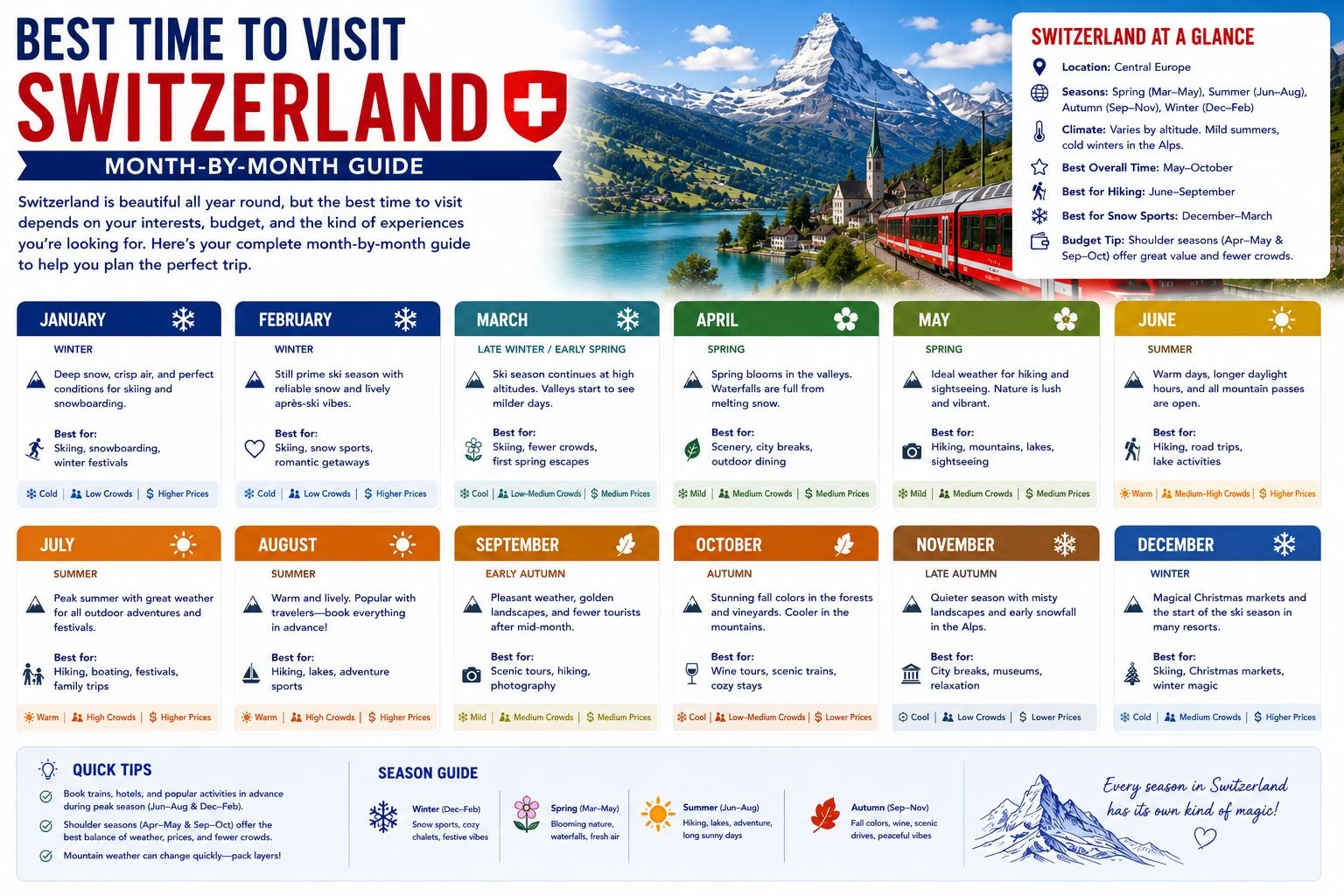
Switzerland does not have a single best time to visit because the country’s extraordinary vertical range, from the lowland lakes at 300 metres to the Alpine passes at 2,000 metres and beyond, means that different seasons offer different and sometimes incompatible experiences. A winter visit brings ski resorts at their best and Christmas markets in the cities but closes the high mountain passes. A summer visit opens every trail and every mountain lift but brings maximum crowds and prices in the most popular regions. Understanding what you specifically want to do and when it is best determines the right time for your trip.
The Swiss Seasons: An Overview
Switzerland has four distinct seasons, more clearly defined than in much of Western Europe because the Alpine topography amplifies seasonal differences. Spring comes late at altitude and dramatically in the lake cities. Summer is warm and sunny at lake level, unpredictable and intense at altitude. Autumn is long and golden in the lowlands, spectacularly coloured in the lower Alpine zones, and produces the first snow at altitude by October. Winter is cold and grey in the Mittelland cities, snowy and bright at altitude.
Month-by-Month: What to Expect
January and February: Peak ski season. The major ski resorts are at maximum snow depth, the weather is consistently cold and clear, and the Alpine air quality in the mountains is extraordinary. The cities (Zürich, Geneva, Lucerne, Bern) are cold (average 0 to 4°C), frequently foggy in the lowland valleys, and at their quietest for tourism. Hotel prices in ski resorts are at their annual peak; city hotel prices are at their lowest. Carnival (Fasnacht) season begins in February, with Lucerne’s carnival starting on the Thursday before Ash Wednesday.
March: Still good skiing, particularly at altitude, as March is often the sunniest month for Alpine conditions. Temperatures begin rising in the lowlands; the sense of spring approaching is palpable. Good time for combining a ski trip with city visits: cheaper city accommodation, improving weather in lower elevations. Basel Fasnacht, one of Switzerland’s most extraordinary cultural events, begins at 4 a.m. on the Monday after Ash Wednesday, which places it in late February or March depending on the year.
April: The transition month. Snow melts rapidly in the lower Alpine zones; ski resorts at altitude (Zermatt, Saas-Fee, the Jungfrau region) remain skiable but lower resorts begin to close. Wildflowers begin appearing in the valleys. The Sechseläuten spring festival in Zürich, which ends with the ceremonial burning of the Böögg, a snowman effigy, typically falls in April. Weather is variable and can be wet.
May: One of the best months for valley and lower mountain hiking, particularly for wildflower season in the Bernese Oberland and Engadine meadows. The Alps are beginning to open; cattle are moved to the high pastures in the traditional Alpaufzug (alp ascent). Crowds are very thin compared to summer. Some mountain lifts and trails may still be closed due to snow at higher elevations, so check opening dates before you plan high-altitude excursions.
June: The beginning of summer. Mountain lifts open fully; hiking season in the high Alps begins, although high routes can still hold snow early in the month. The lake cities warm up and the lake swimming season starts (the lakes are still cold in June, around 18 to 20°C, but swimmable for those accustomed to cold water). Early June is quieter than July and August; accommodation prices begin rising but have not yet reached peak.
July and August: Peak summer season. All hiking trails are open; the Jungfraujoch, the Matterhorn viewpoints, and the major mountain destinations are at maximum capacity. The lake cities are warm and beautiful; lake water temperatures reach 22 to 25°C. This is also the period of maximum crowds and maximum prices in the Jungfrau region and Lake Lucerne area. Afternoon thunderstorms are common in the mountains, so start hikes early.
September: Arguably the best month for an Alpine visit overall. The summer crowds begin to thin after the Swiss school holidays end in mid-August; trail conditions are excellent (snow has melted but the autumn snowfalls have not yet begun at most hiking altitudes); the light is extraordinary as the angle of the sun lowers; and Alpine meadows take on the golden tones that photographers specifically travel for. September is the cattle-descent season (Alpabzug), when herds come down from high pastures in decorated processions, which is genuinely worth watching.
October: Autumn in full effect. Lower Alpine trails still open; higher routes beginning to close with early snowfall, and some mountain lifts close for maintenance from mid-month. The lake regions and vineyards are beautiful with turning colours. The cities are comfortable and uncrowded. Accommodation prices fall significantly in October across most of Switzerland. The first significant snowfalls arrive at altitude, presaging the ski season.
November: The grey month. The lowland cities are under persistent cloud cover; the mountains are in transition between autumn trails and winter snow; ski resorts are not yet open at most locations. November is the least recommended month for a general Switzerland visit. The exceptions: Bern’s Zibelemärit onion market on the fourth Monday of the month, and the first Christmas markets and lights, which begin in late November.
December: The Christmas season. Christmas markets run throughout the month in Zürich, Basel, Bern, Geneva, and Lucerne; each city’s market has a distinct character (see our Switzerland Christmas markets guide). Ski resorts begin opening from early December; conditions are often variable in the first weeks, improving as the month progresses. December is covered in detail in our Visiting Switzerland in December guide.
Festivals and Events Worth Timing a Trip Around
Some of Switzerland’s best experiences are tied to specific dates. Dates move from year to year, so check the official event websites before booking.
Winter and spring: Carnival (Fasnacht) in Lucerne and Basel in February or March; Sechseläuten in Zürich in April.
June: Art Basel, one of the world’s most important contemporary art fairs; hotel prices in Basel rise sharply that week.
July: The Montreux Jazz Festival on the shore of Lake Geneva, and a busy calendar of open-air concerts and lakeside cinemas across the country.
August: Swiss National Day on 1 August, with bonfires, fireworks, and village celebrations everywhere; the Locarno Film Festival, with open-air screenings in the Piazza Grande; the Street Parade in Zürich; and the Lucerne Festival, which continues into September.
September and October: Alpine cattle descents, wine harvest festivals around Lake Geneva and in the Valais, and chestnut festivals in Ticino.
November and December: Bern’s Zibelemärit, the Christmas markets, and Geneva’s Escalade festival in December.
Best Time by Activity
Hiking in the Alps: June to October at altitude; May onwards for valley walks. September is peak quality for the hiking experience: dry trails, no ice, outstanding light, fewer crowds than July and August. See our best time for hiking guide.
Skiing: December to April; peak conditions January to March. Glacier resorts (Zermatt, Saas-Fee, Engelberg) extend the season well beyond that.
Lake swimming: July and August for warm water; June and September for those who can tolerate cooler temperatures.
City visits: Year-round, but spring (April to May) and autumn (September to October) avoid the summer crowds while offering good weather. December for Christmas markets.
Scenic train journeys: Most panoramic routes run all year, but check seasonal breaks before you plan around one. The Glacier Express pauses each year between mid-October and early December (in 2026, no trains run from 11 October to 4 December, with the winter timetable starting on 5 December; the 2027 break is planned for 10 October to 3 December), and the Gotthard Panorama Express only runs from spring to autumn.
The Jungfraujoch: Summer (June to September) for clear views and maximum activity; winter for the snow experience. Spring and autumn have the highest cloud-cover risk.
Peak Season and Price Implications
Switzerland has three distinct price peaks: the major ski resort high season (Christmas to early January, and the carnival and school holiday weeks in February), the summer Alpine tourism high season (July and August), and the Christmas market weekends in December in the cities.
For maximum value: May, June, September, and October all offer good conditions with significantly lower prices than the peak periods. September specifically offers the combination of good Alpine hiking conditions and below-peak prices that makes it the single best month for a first-time Switzerland visit for most travellers.
Combining Regions in One Trip: The Seasonal Complexity
A visitor planning to combine the Bernese Oberland with Geneva and Zürich in one trip should note that the optimal season for each is slightly different, and that a rail pass itinerary requires planning for seasonal access.
June plus Bernese Oberland plus Lake Geneva: Good for both. June in the Jungfrau region means open hiking trails but still snow on high routes; the Lavaux vineyards above Lake Geneva are green and the lake is warming. The compromise month for the combination.
July plus August: Good weather throughout, but the Jungfrau region is at maximum crowding and maximum prices. Book well in advance and go up to the Jungfraujoch first thing in the morning to get the clear views before cloud builds.
September: The month that most experienced Switzerland visitors recommend as the overall best. The crowds have thinned after the Swiss school holidays end in mid-August; the light is extraordinary; the Alpine meadows are at their most golden; the hiking trails are dry and clear at all accessible altitudes; and prices are below the August peaks.
December: The Christmas market season plus the beginning of the ski season. Good for city visits and Christmas markets (Basel, Zürich, Bern); increasingly good for skiing from mid-December at the major resorts.
Seasons and the Swiss Travel Pass
The Swiss Travel Pass costs the same whichever month you travel, and the mountain railway discounts it gives apply year-round, although some of the mountain railways themselves only run in summer. Buying the pass for a shoulder season trip (May, June, September, October) captures the same transport access at a lower accommodation price per night and with substantially fewer crowds on the mountain infrastructure. See our Swiss Travel Pass guide to check whether it pays off for your trip.
Related: Plan Your Trip | Switzerland Travel Costs | How Many Days | Itineraries | Packing for Switzerland
Written by Laura Meier. Updated regularly as prices and conditions change. Corrections and updates are welcome at contact@allaboutswiss.com.