
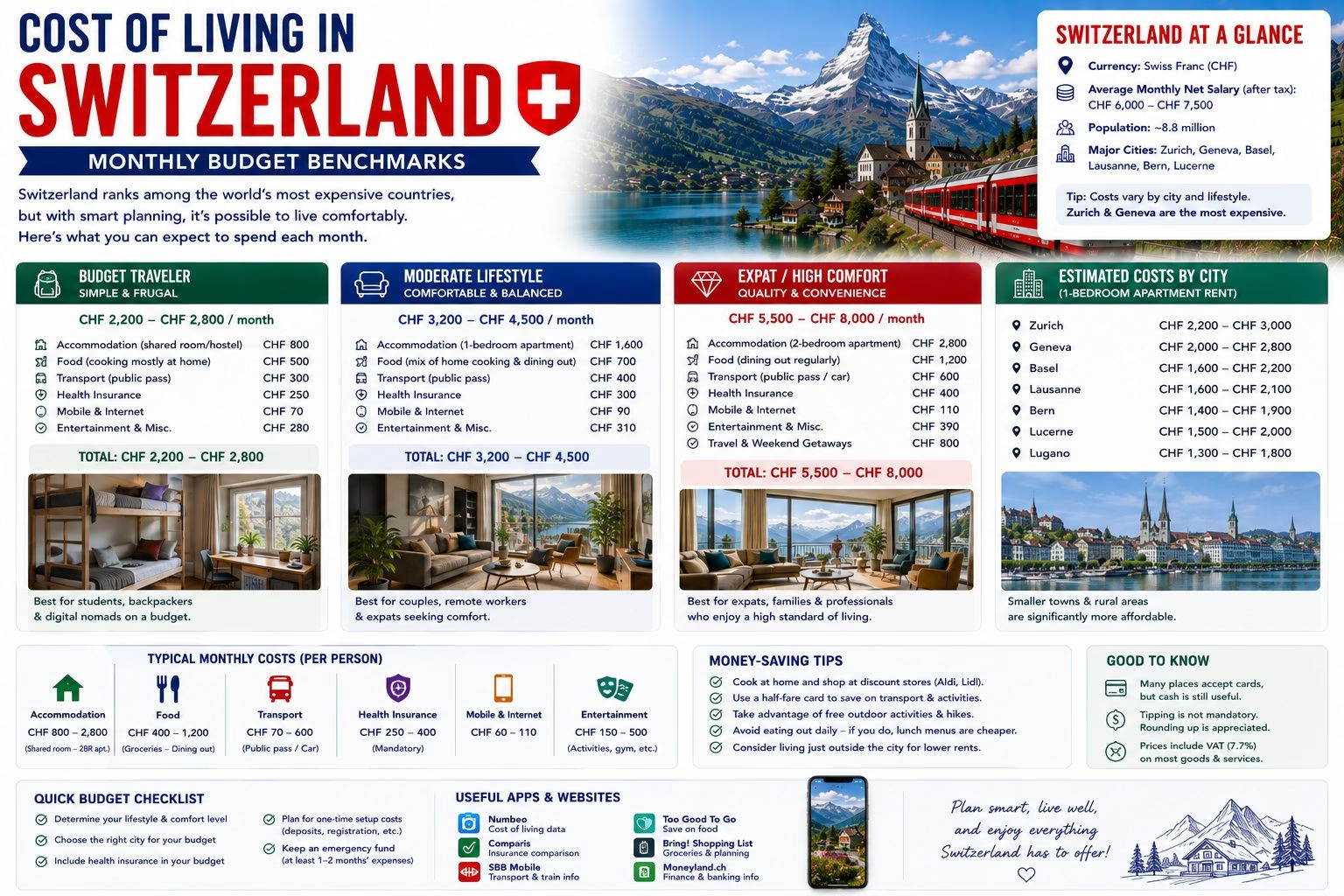
Switzerland is consistently ranked the most expensive country in the OECD for cost of living. The honest question for anyone planning to move here isn’t whether it’s expensive, it clearly is, but how the expense breaks down by category, how much it varies by city, and whether the quality of what it buys justifies the price. For most long-term residents, the answer settles into a genuine yes, but the budget needs to be planned with real numbers rather than general impressions, and the specific line items that surprise newcomers most (mandatory health insurance, rental deposits, the sheer range in rent by district) are worth understanding before committing to a move.
A Comfortable Single-Person Monthly Budget in Zürich
- Rent (one-bedroom apartment, good location): CHF 2,000 to 3,500
- Health insurance (mandatory, depends on canton and model): CHF 300 to 600
- Groceries: CHF 600 to 900
- Transport (SBB travel): CHF 100 to 200, or the Swiss Travel Pass as an annual GA pass: CHF 3,860
- Dining out (regular): CHF 400 to 700
- Total: approximately CHF 4,000 to 6,000 per month
This is a Zürich benchmark specifically, Zürich and Geneva are Switzerland’s two most expensive cities, and the figures above sit at the higher end of what’s realistic nationally. Rent is consistently the largest single line item and the one with the widest range, since it depends heavily on district, apartment age, and how competitive the local rental market is at the time you’re searching. A one-bedroom in Zürich’s Kreis 1 or 2 can run well above CHF 3,500, while the same size apartment in an outer district like Kreis 11 or 12 can come in comfortably below CHF 2,000.
It’s also worth noting that this budget assumes a single person renting alone. Sharing an apartment (Wohngemeinschaft, or WG, a well-established and culturally normal arrangement in Switzerland, not just a student habit) meaningfully lowers the rent line specifically, and is a common strategy for people arriving without a confirmed job or wanting to keep initial costs down while settling in.
How Costs Vary by City
Geneva runs comparably to Zürich, sometimes higher on rent specifically, driven by the concentration of international organisations and their associated demand for housing, a large, well-funded international workforce competing for a limited housing stock pushes prices up in a way that’s structurally similar to Zürich’s financial-sector-driven market, just with a different industry behind it.
Basel and Bern both run noticeably lower, typically 15 to 25 percent less on rent for a comparable one-bedroom apartment, with groceries, dining, and transport costs differing less dramatically since those are more nationally consistent (Swiss retail and transport pricing doesn’t vary city to city nearly as much as rent does). Smaller cities and towns outside the main urban centres can bring the total monthly budget down meaningfully further, particularly on rent, though at the cost of a smaller international job market and social scene, and often a longer, more car-dependent or less frequent commute if working in one of the major cities.
The Biggest Variable Costs to Plan For
Health insurance premiums vary by canton, by insurer, and by the deductible (Franchise) chosen, a higher deductible lowers the monthly premium in exchange for paying more out of pocket before insurance coverage kicks in. This is a genuine planning decision worth making deliberately rather than defaulting to whatever the first quote suggests, since identical mandatory coverage can differ meaningfully in price between insurers for reasons that have nothing to do with quality of care; the full mechanics are covered in the Healthcare for Expats guide.
Rent is the other major variable, and it’s disproportionately affected by district and building age within the same city, the Finding Accommodation guide covers how to search effectively and what a competitive application actually requires, which matters because a slow or poorly-prepared search in a tight market like Zürich’s often means settling for a worse or more expensive option than necessary.
One-Off Costs to Budget For Separately
Beyond the recurring monthly figures above, a move to Switzerland typically involves several one-off costs worth budgeting for separately: a rental deposit (Mietkaution) of up to three months’ rent, held in a blocked account; a Betreibungsregisterauszug (debt collection register excerpt) required for most rental applications, around CHF 17; and, for anyone bringing significant belongings, the cost of international shipping or a temporary furniture rental while settling in. None of these are large relative to the ongoing monthly budget, but they arrive concentrated in the first month or two and are worth planning cash flow around.
What the Cost Buys
The figures above are genuinely high by global standards. They’re also matched, for most residents, by what they buy: a public transport system that’s punctual and comprehensive enough to make car ownership optional in most cities, a healthcare system with short waiting times and high-quality care, low crime rates, and an environmental and infrastructure standard that shows up in daily quality of life rather than only in statistics. Whether that trade-off is worth it is a personal calculation, but it’s rarely disputed by people who’ve actually lived here for a few years, the complaint most long-term expats voice isn’t that Switzerland is expensive, it’s occasionally about the bureaucracy, which is a different problem entirely.
Related: Digital Nomad Guide | Residence Permits | Healthcare for Expats | Finding Accommodation
Written by Laura Meier from Zürich, based on nearly a decade of Swiss residence and ongoing direct experience of the places, trails, trains, and bureaucratic processes described. Updated regularly as prices and conditions change — corrections and updates welcome at contact@allaboutswiss.com.