
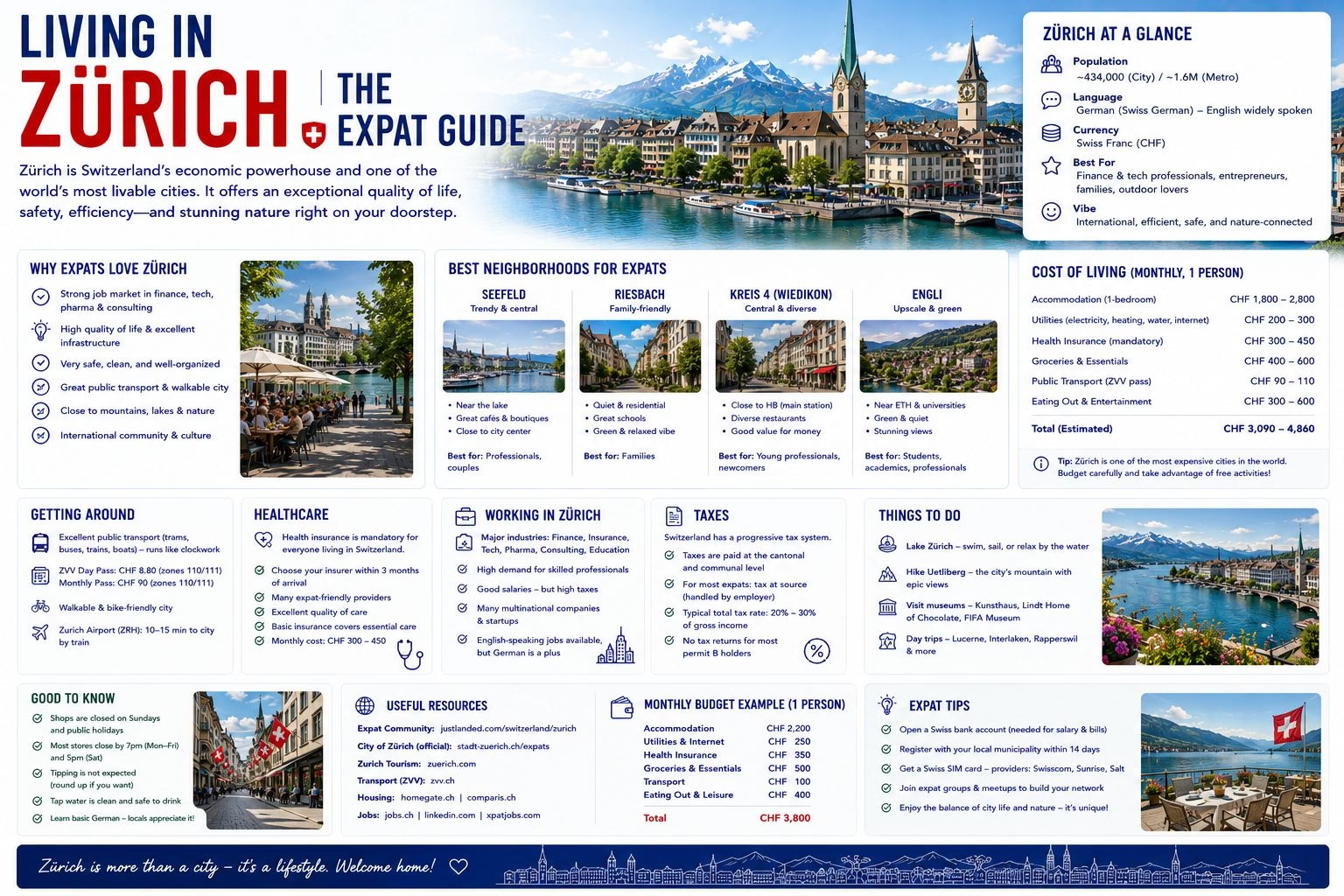
Zürich is the most popular expat destination in Switzerland and one of the most popular in Europe. The combination of a strong job market (the financial services, pharmaceutical, tech, and consulting industries are all heavily represented), genuinely high quality of life, excellent public transport, clean air and water, and immediate access to the Alpine landscape for weekends produces a city that consistently tops quality of life surveys for expatriates. It also has the highest cost of living of any Swiss city and one of the most competitive apartment markets in Europe, and both of those realities need to be planned around rather than discovered after arrival.
This guide covers the four things that actually determine how smoothly a move to Zürich goes: finding somewhere to live, completing the registration process that unlocks everything else, setting up mandatory healthcare, and understanding the social culture well enough to build a genuine life here rather than just a job.
Finding an Apartment in Zürich
The Zürich rental market is the tightest in Switzerland. Vacancy rates in the inner districts (Kreise 1 to 7) are consistently below 1 percent; finding an apartment requires multiple applications, quick decision making, and the right documentation prepared in advance rather than assembled after a promising listing appears.
Required documents for a rental application in Zürich: a Betreibungsregisterauszug (debt collection register excerpt, CHF 17, obtained from your local Betreibungsamt, confirming no outstanding debt collection actions), proof of income or financial means (recent pay slips or bank statements, generally expected to show income around three times the monthly rent), and your permit documentation (B permit, L permit, or other valid residence status). Applications without complete documentation are typically rejected outright, often without the applicant being told why, so completeness matters more here than almost anywhere else in the process.
Online platforms: Homegate, ImmoScout24, and Comparis are the main platforms; new listings go very quickly, often within hours in the most competitive districts. Activating alerts on these platforms and responding within hours of new listings appearing is the standard approach for serious apartment seekers, and waiting even a single day before enquiring is often too late for the best-located or best-priced listings.
Rental prices by district: Kreise 1 and 2 (old town and Wollishofen/Enge): CHF 2,500 to 4,000 or more for a one-bedroom; Kreise 3 to 6 (Wiedikon, Langstrasse, Zürich West): CHF 1,800 to 2,800 for a one-bedroom; Kreise 10 to 12 (Höngg, Oerlikon, Schwamendingen): CHF 1,500 to 2,400 for a one-bedroom. The Zürich Neighbourhoods guide covers the character of each district in more depth, which is worth reading before narrowing a search, since price alone doesn’t capture how differently these areas actually feel to live in day to day.
For anyone arriving without a confirmed job or wanting to keep initial costs down while settling in, sharing an apartment (a Wohngemeinschaft, or WG) is a well-established and culturally normal arrangement in Zürich, not just a student habit, and it meaningfully lowers the entry cost while a longer search for a solo apartment continues in parallel.
The Zürich Registration Process
All residents of Zürich, Swiss and foreign, must register (anmelden) with the Kreisbüro (district office) of their residential Kreis within 14 days of moving in. The registration requires your lease contract, passport, and, for non-EU/EEA nationals, proof of valid residence permit. EU/EEA nationals register their B permit simultaneously with the municipal registration, generally a more streamlined version of the same appointment.
The registration (Anmeldung) is the foundational administrative act for Zürich residence: it activates your access to municipal services, generates your unique register number used for health insurance and other administrative purposes, and establishes your legal residential address for everything from tax filing to the resident parking permits some districts offer. Nothing else on this list can really proceed until this step is complete, so it’s worth booking the Kreisbüro appointment as early as the 14-day window allows rather than waiting until the deadline approaches.
Healthcare in Zürich
Switzerland’s healthcare system requires mandatory health insurance (Grundversicherung) for all residents within three months of arrival, or within three months of birth for children. The insurance is purchased from one of approximately 50 competing insurance companies regulated by the federal FOPH (Federal Office of Public Health). Premiums vary significantly between insurers for the same basic coverage; comparing premiums on the official Priminfo tool (priminfo.ch) before selecting an insurer saves significant money over the course of a year, often more than the time spent comparing would suggest.
The deductible (Franchise) you choose changes the monthly premium meaningfully: a higher deductible lowers the premium in exchange for paying more out of pocket before coverage begins, and the right choice depends on how much healthcare you expect to use rather than defaulting to whichever figure sounds safest. The Healthcare for Expats guide covers this trade-off, and the wider mandatory insurance system, in full.
The Zürich cantonal premium reduction (Prämienverbilligung) is available to lower and middle income residents; check eligibility after your first Swiss tax filing, since the assessment is based on declared income and isn’t available before that filing exists.
Private supplementary insurance (Zusatzversicherung) covers additional services: a private hospital room, international treatment, dental care (not covered by the basic insurance at all), and alternative medicine. This is optional and purchased separately from the mandatory basic policy, and worth evaluating against your actual likely needs rather than bought reflexively.
Opening a Bank Account
A Swiss bank account is straightforward to open once the Anmeldung is complete, since most banks require proof of registered address as part of the application. The major retail banks (UBS, PostFinance, ZKB, Migros Bank, and others) all serve the expat market and generally offer English-language service in Zürich specifically, given the size of the international community. Before registration is complete, a Swiss account isn’t really accessible, which is why many new arrivals rely on international banking apps like Wise or Revolut for the first few weeks.
Swiss Social Culture in Zürich
Zürich’s social culture is quieter and more formal in initial contact than many expats expect, particularly those arriving from Southern Europe, North America, or East Asia. Swiss friendships develop slowly and require consistent contact over time; the immediate warmth of some other cultures is not the Zürich default. This is not unfriendliness; it is a different social rhythm, and understanding that early tends to prevent the frustration that otherwise builds in the first few months. The Swiss Culture and Etiquette guide covers the broader cultural norms worth knowing beyond the social pace specifically.
The expat community in Zürich is very large and well organised: InterNations Zürich has active events; the various national societies (English, American, Australian, French, Italian, Spanish) organise regular gatherings; and the work based social networks in the financial and tech industries are extensive. Building a social network in Zürich is entirely possible; it typically takes 6 to 12 months before it feels established, which is worth knowing in advance so the early quiet months don’t feel like a sign that it isn’t working.
Language learning matters: Zürich functions in English at a professional level, but German, specifically functional Swiss Standard German sufficient to read official correspondence and manage administrative interactions, significantly improves the quality of daily life and the depth of local engagement available. The Languages in Switzerland guide covers the practical distinction between Swiss German (spoken daily) and Standard German (written and used with non-Swiss-German speakers).
Related: Expat and Nomad Hub | Digital Nomad Guide | Zürich City Guide | Cost of Living
Written by Laura Meier from Zürich, based on nearly a decade of Swiss residence and ongoing direct experience of the places, trails, trains, and bureaucratic processes described. Updated regularly as prices and conditions change; corrections and updates welcome at contact@allaboutswiss.com.