
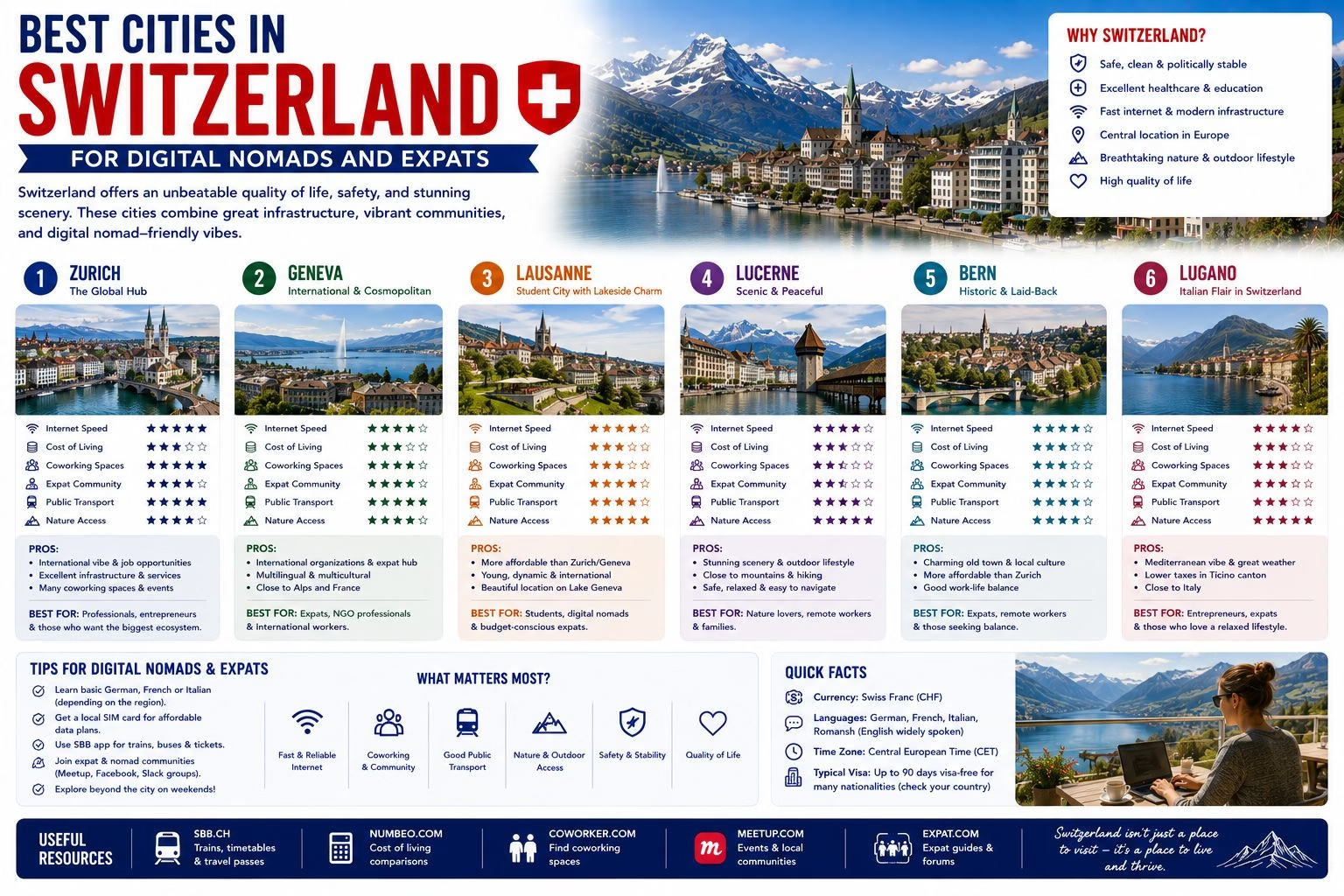
Switzerland’s small size means every major city is within a few hours of every other by train, but the cities themselves are genuinely different in character, cost, language, and the specific industries that dominate their job markets. The right choice depends heavily on what you’re optimising for: job market and international community, cost, language environment, or lifestyle, and it’s worth being honest with yourself about which of those actually matters most, since the four cities below genuinely don’t converge on a single obvious winner.
Zürich: The Default Choice
Zürich is Switzerland’s largest city and its financial and commercial centre, with the strongest and most internationally-oriented job market in the country: financial services, pharmaceuticals, technology, and consulting are all heavily represented, and English functions at a professional level throughout the business environment, to the point where some multinational employers operate almost entirely in English internally. It’s also the most expensive city for rent specifically, and the tightest rental market in the country, covered in detail in the Living in Zürich guide.
The expat and international community is large and well organised, which makes the initial social adjustment easier than in smaller cities, even though genuine Swiss friendships take time to build regardless of city, the Swiss Culture and Etiquette guide covers what to expect on that front. For most people relocating for a specific job in finance, tech, or pharma, Zürich is the default answer for good reason rather than mere inertia.
Geneva: International and French-Speaking
Geneva is French-speaking and has a distinctly international character driven by the concentration of United Nations agencies, international organisations, and multinational corporate headquarters based there. It has one of the highest concentrations of foreign nationals of any Swiss city and a genuinely international social and professional environment, with rent and general cost of living comparable to or sometimes exceeding Zürich, particularly in the districts closest to the international organisation district.
French, rather than German, is the more useful language to learn for daily life here, though English is again widely functional in the international professional sphere specifically, the Languages in Switzerland guide covers the practical distinction between what you need for professional life versus genuinely local daily life. Geneva suits people whose work or interests are specifically international-organisation- or diplomacy-adjacent, or who simply prefer a French-speaking base.
Basel: More Affordable, Pharma-Focused
Basel sits on the border with both France and Germany and has a job market strongly shaped by the pharmaceutical and life sciences industry, alongside a genuinely strong arts and culture scene, including Art Basel, one of the most significant contemporary art fairs globally. Rent and general living costs run noticeably below Zürich and Geneva, typically 15 to 25 percent lower on comparable rent, while still offering a solid international community, particularly connected to the pharma sector specifically.
The tri-national location is a genuine practical feature, not just a geographic curiosity: many Basel residents live with easy access to France and Germany for day trips, cheaper shopping, or even cross-border commuting in some cases, which isn’t really replicable from any of the other three cities on this list.
Bern: The Quieter Capital
Bern is Switzerland’s political capital, smaller and quieter than Zürich or Geneva, with a job market weighted toward government, public administration, and a smaller but genuine private sector. Costs run below Zürich and Geneva, the pace of life is markedly slower, and the medieval old town (a UNESCO World Heritage Site) makes for a genuinely pleasant place to live day to day rather than only to visit.
The international/expat community, while present, is considerably smaller than in the other three cities, Bern suits people prioritising a calmer, more distinctly Swiss daily life over the density of international professional networking available in the larger cities, and it’s often underrated by people who default to Zürich or Geneva without seriously considering it.
Zug: The Low-Tax Alternative
Zug is worth a separate mention: a small city near Zürich known for having some of the lowest cantonal tax rates in Switzerland, which has made it a genuine hub for business, crypto and blockchain companies, and financially-minded remote workers specifically. It’s quieter and smaller than any of the four cities above, with a correspondingly smaller international social scene, but for anyone whose priority is minimising Swiss tax exposure while staying close to Zürich’s job market and transport links, it’s a real option worth investigating rather than an afterthought.
Other Low-Cost and Low-Tax Cantons
Beyond the five cities above, several smaller cantons offer genuinely lower costs and, in some cases, lower cantonal tax rates than any of them: Schwyz, Nidwalden, and Obwalden (all a short commute from Zürich or Lucerne) are known for competitive tax rates alongside Zug, while more rural cantons like Glarus, Jura, and Uri offer meaningfully cheaper housing than any of the five main cities, at the cost of a much smaller job market and international community. These are worth investigating for anyone whose priority is cost or tax efficiency over city life and networking access, though exact tax rates vary by municipality within each canton and are worth confirming directly rather than assuming from general reputation.
Choosing Between Them
For the strongest job market and largest international community: Zürich. For an international, French-speaking environment specifically: Geneva. For meaningfully lower cost without sacrificing a genuine international community: Basel. For a quieter, more distinctly Swiss experience at a lower cost: Bern. Language is worth weighing seriously in this decision: German-speaking Switzerland (Zürich, Basel, Bern) and French-speaking Switzerland (Geneva, and Lausanne) are genuinely different linguistic and cultural environments, and the choice affects daily life well beyond the workplace, from grocery store interactions to how quickly you’ll feel properly settled rather than perpetually a visitor.
Related: Living in Zürich | Cost of Living | Digital Nomad Guide | Coworking Spaces
Written by Laura Meier. Updated regularly as prices and conditions change: corrections and updates welcome at contact@allaboutswiss.com.