
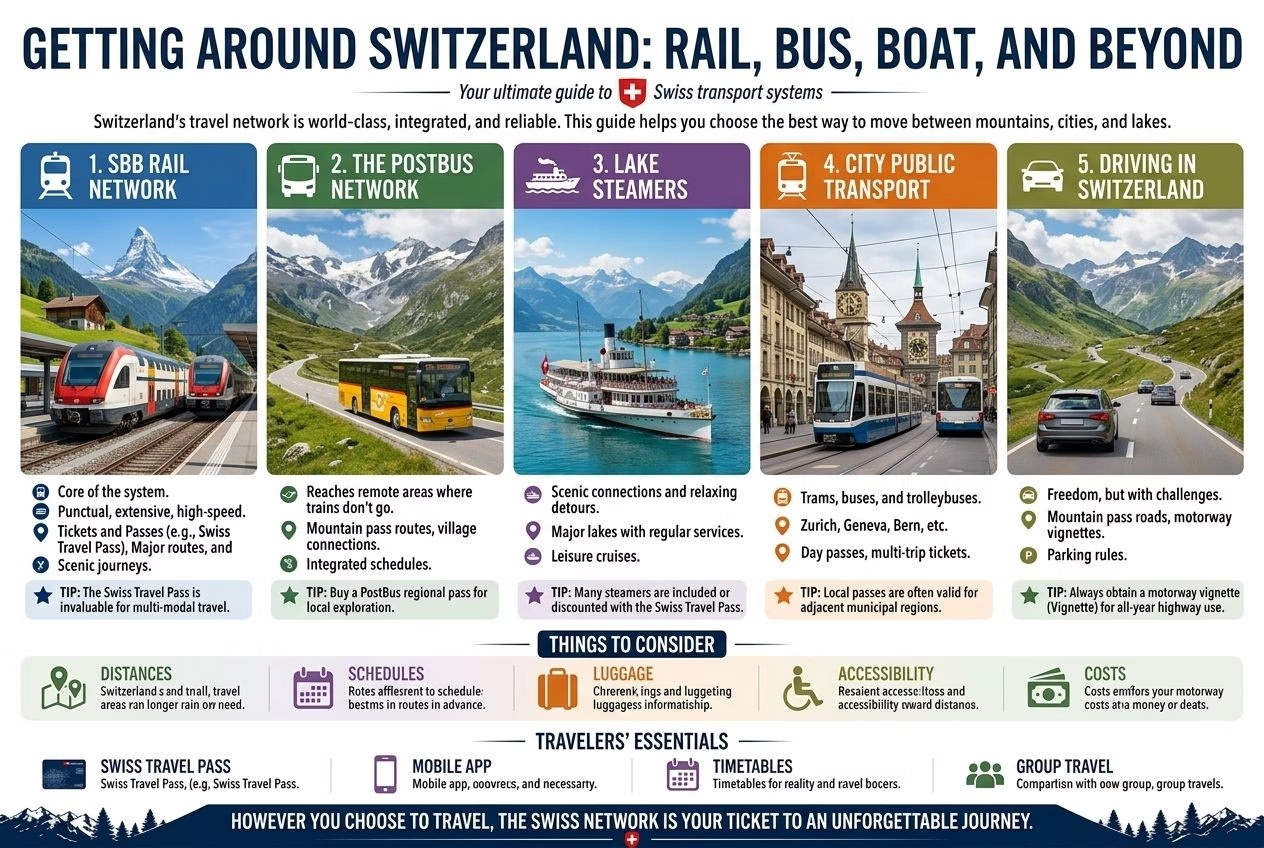
Switzerland’s public transport system is consistently ranked the best in the world. The combination of the SBB rail network, the PostBus services, the lake steamers, the mountain railways, and the integrated city public transport systems provides access to virtually everywhere in the country without a private vehicle. This guide covers how the system works and how to use it efficiently.
The SBB Rail Network
Swiss Federal Railways (SBB, CFF in French, FFS in Italian) operates the backbone of the system: an intercity and regional rail network covering all Swiss cities and the main valleys. The network runs to a takt (clockface timetable) where trains depart at the same minutes past each hour, making connections predictable and reliable. Swiss trains are on time to a degree that surprises visitors: a train only counts as late in Switzerland’s punctuality statistics once it is more than 3 minutes behind schedule.
Booking tickets: The SBB Mobile app (free for iOS and Android) handles all ticket purchase and provides real-time departure information. Tickets purchased via the app are electronic; no printed ticket is needed. Supersaver tickets (Sparbillette / billets dégriffés) offer discounts of up to 50 percent, and up to 70 percent on selected trains, with the best availability off-peak and when booked early. They are tied to a specific train and non-refundable, and they are the most practical way to keep transport costs down without a Swiss Travel Pass. Our SBB trains guide covers the railway in more detail.
The PostBus Network
The PostBus (PostAuto, CarPostal) network operates more than 850 routes connecting villages and mountain areas not served by rail. The yellow buses are recognised throughout Switzerland and are covered by the Swiss Travel Pass. The PostBus timetable is fully integrated into the SBB app: all connections between trains and buses are planned together. For visitors exploring rural areas, the PostBus is the difference between needing a hire car and not needing one. On popular mountain pass routes in summer, seat reservations are sometimes required, so check the timetable before you travel.
Lake Steamers
Switzerland’s major lakes are served by boat services that are practical transport as well as tourist experiences. The lake companies operate scheduled services on Lake Geneva, Lake Lucerne, Lake Thun, Lake Brienz, Lake Zürich, Lake Constance, and others, many of them with restored historic paddle steamers. The Swiss Travel Pass covers most scheduled services; frequencies drop sharply in winter, when some routes do not run at all.
The most rewarding lake journeys for visitors: Lucerne to Flüelen across Lake Lucerne (around three hours, through the landscape of the William Tell legend), Interlaken to Brienz on the turquoise Lake Brienz, and Lausanne to Montreux along the Lavaux vineyard terraces on Lake Geneva.
City Public Transport
Each Swiss city operates its own integrated public transport network (ZVV in Zürich, TPG in Geneva, Bernmobil in Bern) of trams, buses, and local rail. The Swiss Travel Pass covers these networks in dozens of towns and cities; visitors without the pass should buy a day ticket for their city rather than individual fares if they plan several journeys. In many cities, including Geneva, Basel, Bern, and Lausanne, hotel guests receive a free local transport card for the length of their stay, so ask at check-in.
Switzerland uses a zone system for city transport; make sure your ticket covers the zones you need. Most visitor activities are within the central zones, but airports are often outside them: in Zürich, for example, the airport is in a different zone from the city centre, so a city-only ticket is not valid for the airport journey.
Always buy or validate your ticket before boarding. There are no ticket checks at the doors, but inspectors carry out frequent random checks and issue on-the-spot fines to passengers without a valid ticket.
Driving in Switzerland
Driving is not necessary for most Switzerland visits, given the public transport quality, but may be useful for visiting remote areas, the Jura, or making flexible detours.
Motorway vignette: Any use of the Swiss motorway network requires a vignette, which costs CHF 40 and is valid for the calendar year. It is available as a traditional windscreen sticker at petrol stations, post offices, and border crossings, or as a digital e-vignette linked to the car’s number plate, bought online through the official federal portal. Rental cars registered in Switzerland already have one; cars hired in neighbouring countries usually do not.
Speed limits: 120 km/h on motorways, 100 km/h on expressways, 80 km/h on other roads outside built-up areas, and 50 km/h in towns (often 30 km/h in residential zones). Speed cameras are common, and fines are steep; serious speeding is treated as a criminal offence.
Rules that differ from other countries: Overtaking on the right is prohibited on motorways. Headlights or daytime running lights must be on at all times. Using a mobile phone while driving is only allowed hands-free. The drink-driving limit is 0.5 per mille, and lower (effectively zero) for new drivers.
Winter driving: Winter tyres are not legally mandatory, but in winter conditions a car without them can be held responsible if it causes an accident or blocks traffic, so all rental cars should have them. Snow chains are compulsory where signposted, which is common on mountain roads.
Mountain passes and car trains: Most high Alpine passes close for several months each winter, typically from late autumn to late spring depending on snow; check current road status before planning a mountain route. When the passes are closed, car-carrying trains through the Lötschberg, Furka, and Vereina tunnels keep key routes open all year.
Related: Swiss Travel Pass | SBB Trains | Plan Your Trip | Practical Info Hub
Written by Laura Meier. Updated regularly as prices and conditions change. Corrections and updates are welcome at contact@allaboutswiss.com.