
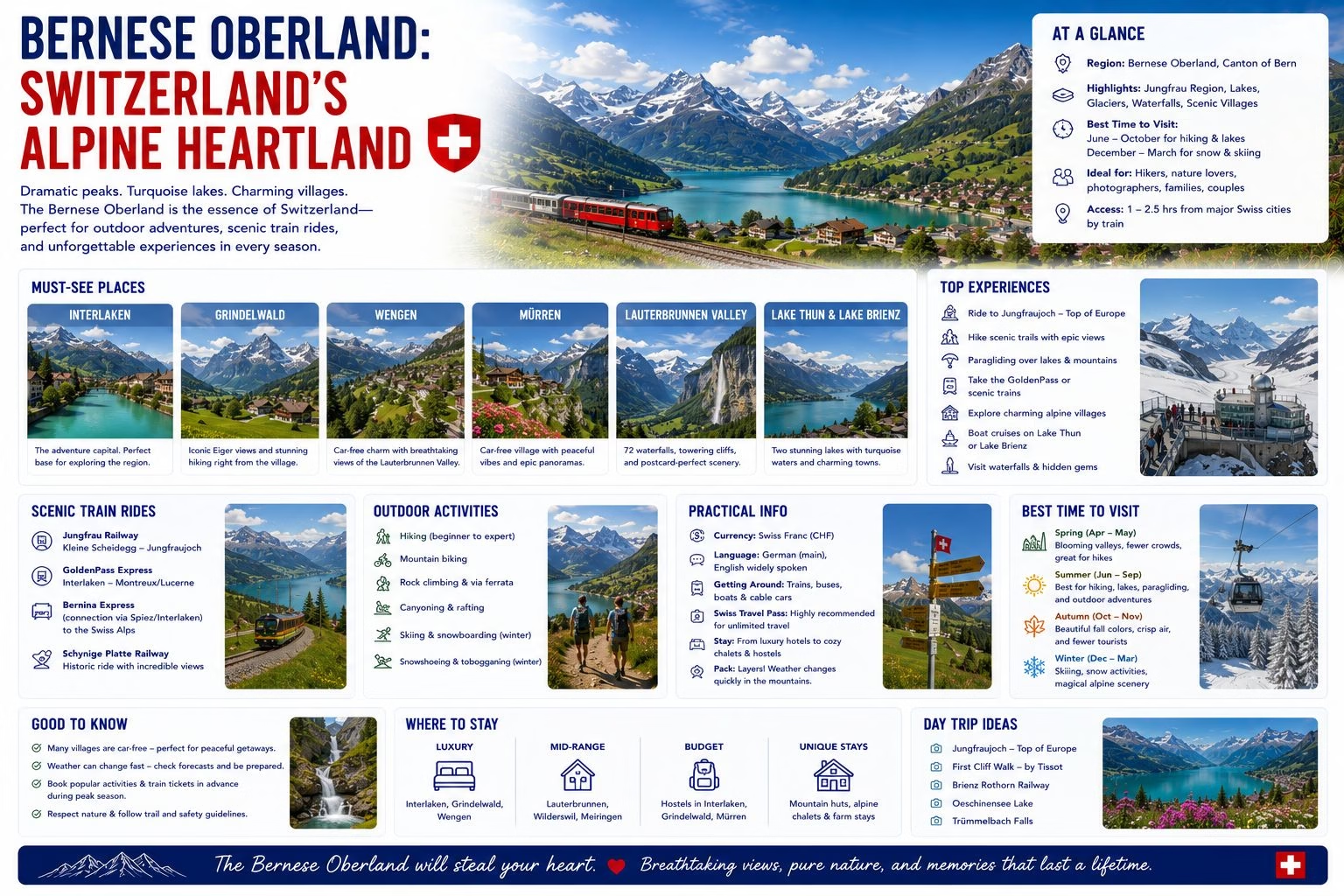
The Bernese Oberland is the region of Switzerland that most people think of when they think of Switzerland: the dramatic limestone walls of the Eiger, Mönch, and Jungfrau, the deep-cut valleys with their waterfalls, the car-free villages on the cliffs above, and the glaciers descending from the high peaks. It lies in the south of the canton of Bern and includes the Jungfrau region, the lakes of Thun and Brienz, and the valleys that connect them.
The Jungfrau Region
The triangle of mountains formed by the Eiger (3,967 metres), Mönch (4,107 metres), and Jungfrau (4,158 metres) is the most visited Alpine area in Switzerland. The infrastructure of trains, cable cars, gondolas, and hiking trails that provides access to the terrain at every altitude is the most developed in the Swiss Alps.
The main access points: Interlaken (the valley transport hub), Grindelwald (eastern approach, Eiger views), Wengen (car-free village, western approach), Mürren (car-free village, cliff above Lauterbrunnen, highest views), and Kleine Scheidegg (the col between Grindelwald and Wengen valleys, departure point for the Jungfraujoch railway).
The Lauterbrunnen Valley
The Lauterbrunnen valley is one of the most dramatic glacial valleys in Europe: a flat-floored U-shaped valley with sheer limestone walls rising hundreds of metres on both sides, 72 waterfalls descending from the plateau above, and the specific enclosed quality of a valley carved by repeated glaciation. The Staubbachfall (297 metres, one of Europe’s highest free-falling waterfalls) is visible from the village; the Trümmelbachfälle (inside a mountain, accessible by lift and stairs) is a more dramatic and less-visited waterfall experience that shows the glacial meltwater rushing through the rock in a way that outdoor waterfalls do not.
The Aletsch Glacier
The Aletsch Glacier, seen from the Jungfraujoch summit or from the Bettmerhorn cable car on the Valais side, is the longest glacier in the Alps at roughly 20 kilometres. It is a UNESCO World Heritage Site and one of the most significant climate indicators in the Alps; the annual glacial retreat is measured and published. The view from the Jungfraujoch across the upper Aletsch Glacier, with the medial moraines visible as dark lines on the ice and the scale of the glacial system comprehensible from the summit, is one of the most powerful natural landscape experiences in Switzerland.
Lake Thun and Lake Brienz
The two lakes at the foot of the Bernese Oberland serve both as transport routes (the lake steamers connect Interlaken to Thun and to Brienz, covered by Swiss Travel Pass) and as destinations in their own right.
Lake Thun is the more urban of the two, with the castle town of Thun at its northern end and the resort towns of Spiez and Oberhofen along its shore. The Thun castle (Schloss Thun) holds the Historical Museum of the Bernese Oberland in a 12th-century keep with a four-tower roof.
Lake Brienz is deeper, bluer, and more dramatically walled by the surrounding mountains. Brienz village is the centre of Swiss wood carving (the Brienz woodcarving school has operated since 1884), and the Brienzer Rothorn rack railway (steam-powered in summer) climbs from the lake shore to the summit at 2,350 metres.
The Niederhorn and Beatushöhlen
Above Interlaken to the north, the Niederhorn (1,963 metres, accessible by cable car from Beatenberg) provides panoramic views over both lakes and the Jungfrau massif. The Beatushöhlen (St Beatus Caves) below the Niederhorn are one of the most extensive show caves in Switzerland: 1 kilometre of illuminated caverns with stalactites, stalagmites, and an underground waterfall, connected to the legend of St Beatus, who supposedly drove a dragon from the caves.
Getting There and Around
Interlaken is the region’s transport hub, with direct trains from Zürich (around 2 hours) and Bern (50 minutes), and two stations: Interlaken West, closest to the Thun lake steamers and the trains to Bern, and Interlaken Ost, the departure point for the Jungfrau region, Lake Brienz, and the Luzern-Interlaken Express to Lucerne. Within the region, the lake steamers on Thun and Brienz, the branch rail lines into the side valleys, and the extensive cable car network mean a car is genuinely unnecessary and often less convenient than the public transport for reaching the specific viewpoints and villages described above.
Related: Interlaken | Grindelwald Skiing | Jungfrau Hiking | Zermatt Hiking | Plan Your Trip
Written by Laura Meier. Updated regularly as prices and conditions change; corrections and updates welcome at contact@allaboutswiss.com.