
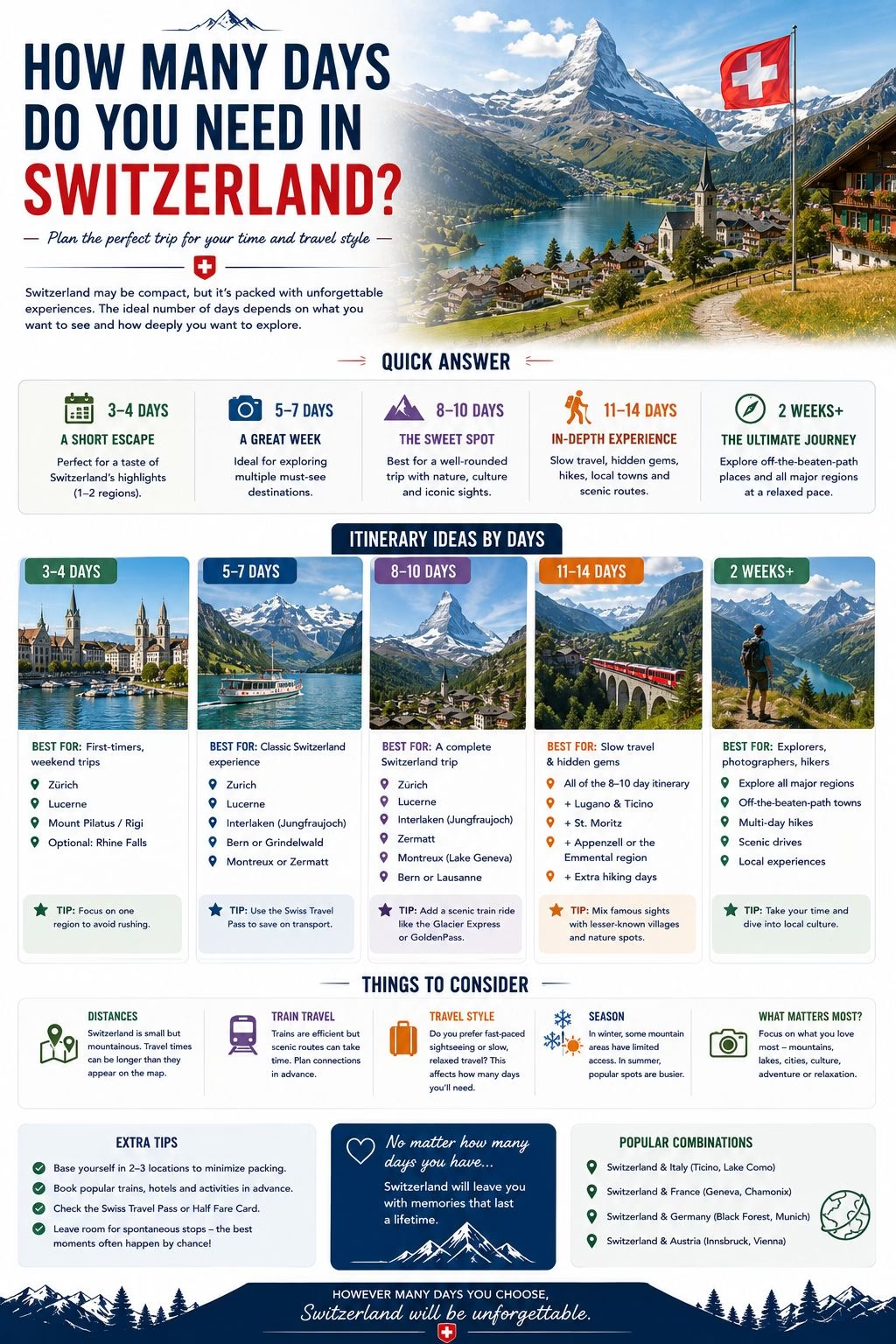
Switzerland is a small country, roughly 220 kilometres from west to east and 220 kilometres from north to south at its widest. But its internal diversity, the combination of four language regions, four major city characters, and an Alpine landscape with dozens of distinct areas, means that meaningful coverage requires significantly more time than its physical size suggests. One week is the minimum for understanding even a fraction of what Switzerland offers; two weeks allows for the depth that produces a genuinely rich experience.
The Honest Assessment by Trip Length
Three to four days: One city plus one Alpine experience
Three or four days is enough for one Swiss city experienced properly, with one significant Alpine excursion. The most natural combinations:
Zürich with a day trip to the Jungfraujoch or Pilatus; Lucerne with the boat-and-mountain-railway circuit to Pilatus or Rigi; Geneva with a day trip to Gruyères and the Jungfrau region via train.
A three-day Switzerland visit produces a first impression rather than a genuine understanding of the country. If this is what the itinerary allows, focus on one thing rather than trying to cover the famous highlights in a hurried circuit.
One week: The standard first visit
One week is the most common Switzerland trip length for international first-time visitors and allows for a genuine experience of two or three distinct regions. The most rewarding one-week circuit:
Zürich (2 days) + Bernese Oberland / Jungfrau region (2 to 3 days) + Lucerne (1 to 2 days)
This triangle connects Switzerland’s largest city, its most dramatic Alpine landscape, and its most visually iconic lake town via frequent direct trains. The Bernese Oberland section, based in Grindelwald or Interlaken, provides access to the Jungfraujoch, the Schilthorn, and multiple hiking circuits depending on the season. The full one-week itinerary framework is in the one-week Switzerland itinerary.
An alternative one-week route for different interests: Geneva (2 days) + Lausanne/Lake Geneva (1 day) + Valais/Zermatt (2 to 3 days) + Bern (1 day). This route gives the French-speaking west, the spectacular Valais landscape, and the federal capital in a coherent west-to-east progression.
Two weeks: Beginning to understand the country
Two weeks allows for three or four regions visited with genuine depth rather than passing impressions. The classic two-week circuit adds Basel and the Italian-influenced Ticino to the one-week elements:
Zürich (2 days) + Basel (1 to 2 days) + Bern (2 days) + Bernese Oberland (2 to 3 days) + Lucerne (1 to 2 days) + Ticino/Lugano (1 to 2 days)
Or a hiking-focused two weeks: Geneva or Zürich for arrival (1 day) + Zermatt (2 to 3 days) + Saas-Fee (1 day) + Bern (1 day) + Grindelwald/Jungfrau (3 to 4 days) + Lucerne (1 day) + departure
The full two-week itinerary is in the two-weeks Switzerland guide.
Three weeks or more: A proper exploration
Three weeks allows for the full Swiss circuit plus regional depth in at least one area. The additions that most reward extended time:
Graubünden: Switzerland’s largest canton, covering the Engadine valley, St Moritz, the Bernina Express route, the Via Mala gorge, and the Romansh-speaking villages that feel like a different country from German-speaking Zürich. Accessible from Zürich via Chur in under 90 minutes, Graubünden rewards at least 3 to 4 days of its own.
The Jura: The limestone ridge northwest of the Mittelland, almost never featured in standard Switzerland travel coverage. The Jura has excellent ridge hiking, beautiful small towns (Porrentruy, Delémont, the watchmaking towns of the Jura vaudois), and a quality of rural Switzerland that the famous Alpine destinations do not provide.
The Uri/Central Switzerland lakes: The Urnersee, the wildest arm of Lake Lucerne, with the Tell country, the Rütli meadow where the Swiss Confederation was founded according to tradition, and the Axenstrasse road carved into the cliff above the lake.
Planning Around Specific Interests
Hiking only: One week in the Bernese Oberland or the Valais provides more hiking than most visitors can exhaust. The Jungfrau region alone has more than 300 kilometres of marked hiking trails at varying altitudes. For a dedicated hiking trip, staying in one base (Grindelwald, Mürren, or Zermatt) for the full week and doing day hikes each day produces a richer experience than moving between multiple bases.
Skiing only: One week is the standard ski holiday length. The major Swiss ski resorts have enough terrain for a week or more; multi-day lift passes are most economical for stays of five days or more.
City culture: Switzerland’s cities reward time. Zürich is the most complex and most rewarding of the Swiss cities for extended exploration; three to four days is genuinely productive. Geneva has a specific quality that reveals itself slowly; two nights is the minimum for a meaningful Geneva experience.
The scenic trains: The Glacier Express, Bernina Express, Goldenpass, and Gotthard Panorama can be combined into a multi-day scenic rail circuit. A dedicated scenic rail week, staying in different rail towns each night and riding a different panoramic route each day, is one of the most distinctive and most organised Switzerland trip formats.
The Pace of Swiss Travel
Switzerland’s train connections are fast enough that it is technically possible to cover the major cities and the Jungfrau in a single very busy week. It is not the best approach. The Swiss travel experience is at its best when it includes unhurried time: the morning at a lake café before the day-trippers arrive, the afternoon hike that goes slower than planned because the view from a ridge is too good to rush past, the evening fondue that turns into a long conversation.
Budget one morning or afternoon in every two or three days with no specific plan. This is not waste; it is how Switzerland produces its best experiences.
The Day-Count for Specific Experiences
The Glacier Express: This is a full-day commitment (7.5 hours one way). To do the Glacier Express and not sacrifice another destination day, it requires either starting the train from Zermatt on the last day before departing from St Moritz or Chur, or building a specific \”train day\” into the itinerary. The partial journey option (Zermatt to Andermatt, approximately 3 hours, covering the most dramatic section) can be combined with a return journey on a different route, making the scenic rail experience a half-day.
The Jungfraujoch: A full day is needed. The round trip from Grindelwald takes 4 to 5 hours minimum; add travel from a city base and the day is committed. Building this into the itinerary as a dedicated Alpine day rather than squeezing it between other activities produces a better experience; rushing the summit because you have a 5pm dinner reservation in Zürich is a common miscalculation.
Zermatt: A minimum of two nights is needed to experience Zermatt properly. One night gives you the village; two nights gives you the village plus one of the cable car systems (Klein Matterhorn or the Sunnega/Rothorn system) plus one hiking day. Combining Zermatt with the Jungfrau region in a single Swiss trip requires at least 8 to 10 days total.
What Rushing Switzerland Looks Like
The 5-day Switzerland tour from a European capital, hitting Zürich, Lucerne, Interlaken, Zermatt, and Geneva, is a format that exists and that reliably produces visitors who saw all of them and experienced none of them properly. The Jungfraujoch in 3 hours, Zermatt as a single overnight, and Zürich as two half-days: each of these is insufficient for what each place offers.
The alternative: if 5 days is all you have, choose two destinations and spend 2.5 days in each. The Jungfrau region and Lucerne, or Zürich and Zermatt, or Geneva and the Bernese Oberland. The depth produces the return visits that Switzerland’s travel statistics consistently show.
Related: Plan Your Trip | Best Time to Visit | Switzerland Itineraries | Destinations
Written by Laura Meier. Updated regularly as prices and conditions change. Corrections and updates are welcome at contact@allaboutswiss.com.