
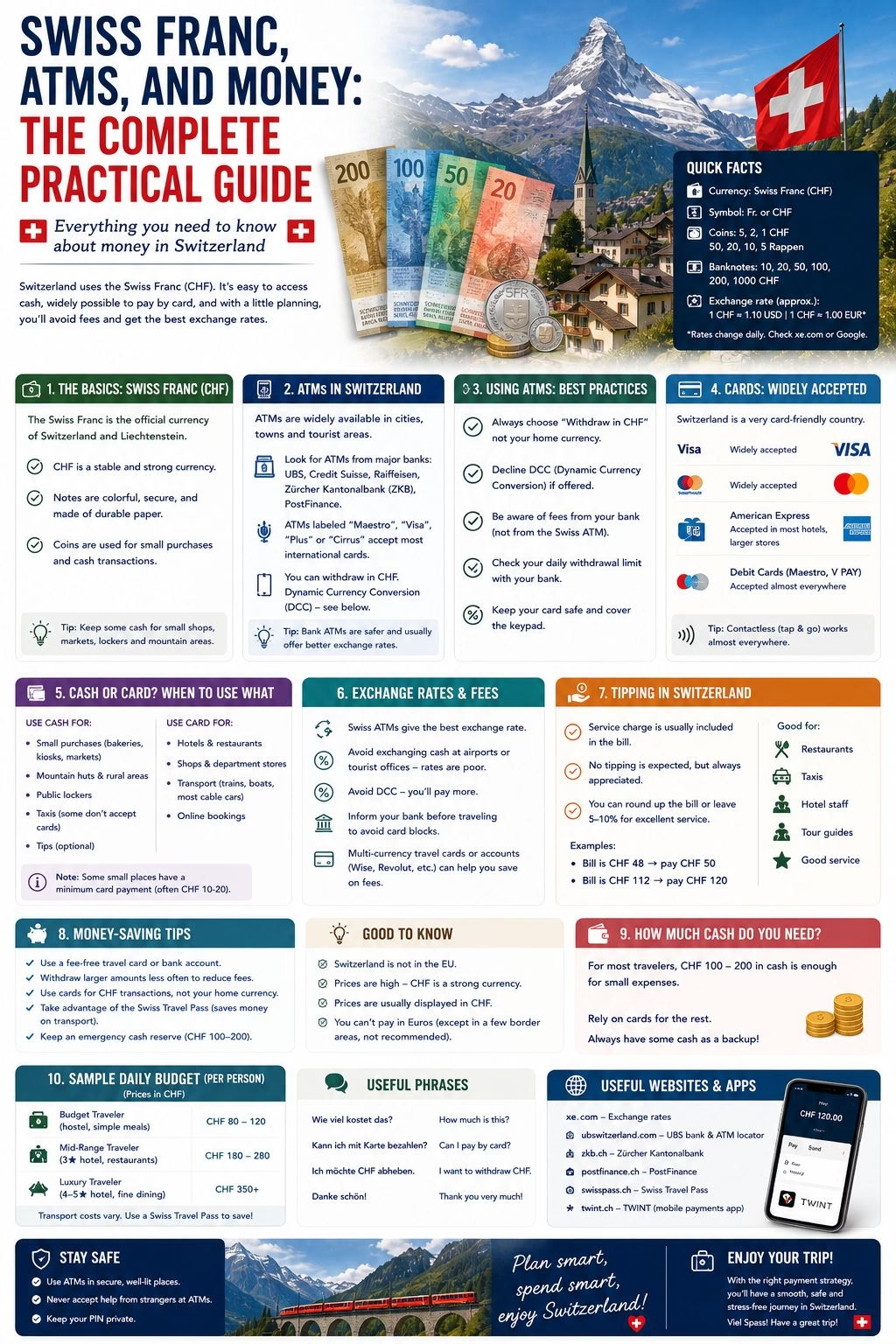
Switzerland uses the Swiss Franc (CHF), one of the world’s strongest and most stable currencies. Managing money in Switzerland requires understanding the currency, the payment culture, and the specific situations where costs are higher than visitors expect.
The Swiss Franc (CHF)
The Swiss Franc is abbreviated CHF (from Confoederatio Helvetica, the country’s Latin name, plus Franc) or Fr. in everyday use. Notes come in denominations of CHF 10, 20, 50, 100, 200, and 1,000; coins in CHF 5, 2, 1, 0.50, 0.20, 0.10, and 0.05.
The CHF is a traditional safe-haven currency that tends to strengthen in times of global financial stress. In recent years one franc has been worth slightly more than one euro. Exchange rates move, so check a live rate before you travel rather than relying on a fixed figure.
Payment Methods
Switzerland is a predominantly card-based society. Visa and Mastercard are accepted at virtually all restaurants, hotels, shops, and transport ticket offices, and contactless payment by card, phone, or watch is universal at established businesses. American Express has more limited acceptance. Locals also use TWINT, a Swiss mobile payment app, but it generally requires a Swiss bank account, so most visitors will simply use their cards.
Cash is still useful for: some bakeries and small street stalls; mountain huts and remote alpine restaurants; small village businesses; farm shops and honesty boxes; and markets. Carrying CHF 50 to 100 in cash covers most situations where cards are not accepted.
ATMs (Bancomats)
ATMs (called Bancomats in Switzerland) are widely available throughout Swiss cities and towns, including at almost every railway station. The main networks are run by the major banks, cantonal banks, Raiffeisen, and PostFinance. International cards (Visa, Mastercard, Maestro) work at all standard ATMs.
The cost of a withdrawal depends mainly on your home bank, which may charge a foreign withdrawal fee and a currency conversion fee; some ATM operators add their own charge, which is shown on screen before you confirm. Cards with low or no foreign fees (such as Revolut or Wise, or travel-focused bank cards) can reduce these costs significantly.
Euro in Switzerland: Accepted but Expensive
Switzerland is not in the eurozone, but the euro is accepted at many tourist establishments, hotels, railway ticket offices, and border-area businesses. The exchange rate applied when paying in euros is almost always worse than the market rate, and change is usually given in francs, so paying in euros typically costs noticeably more than paying in CHF.
Always pay in CHF rather than euros when given the choice; this is the single most consistent money-saving practice in Switzerland. Similarly, when a card terminal or ATM offers “dynamic currency conversion” (charging you in your home currency rather than CHF), always decline and choose CHF: the conversion rate offered is almost always poor.
Tipping Culture
In Switzerland, service is always included in restaurant and bar prices, and staff are paid a proper wage, so tipping is never obligatory. The usual approach is simply to round up the bill to a convenient figure, or leave a few francs for good service at a sit-down meal. A 15 to 20 percent tip in the North American style is not expected and would be unusual. When paying by card, tell the server the total you want to pay (including any rounding up) before they process the payment. Our culture and etiquette guide covers other everyday customs.
Keeping Costs Down
Swiss prices are high, but a few habits make a real difference: eat your main meal at lunchtime, when most restaurants offer a fixed-price menu; use supermarkets (Coop and Migros both have good take-away counters) for picnics and snacks; refill a water bottle from taps and public fountains; and use the free local transport card that many cities give hotel guests. For a full picture of what a trip costs, see our Switzerland travel costs guide.
Related: Getting Around | Swiss Travel Pass | Budget Guide | Practical Info Hub
Written by Laura Meier. Updated regularly as prices and conditions change. Corrections and updates are welcome at contact@allaboutswiss.com.