
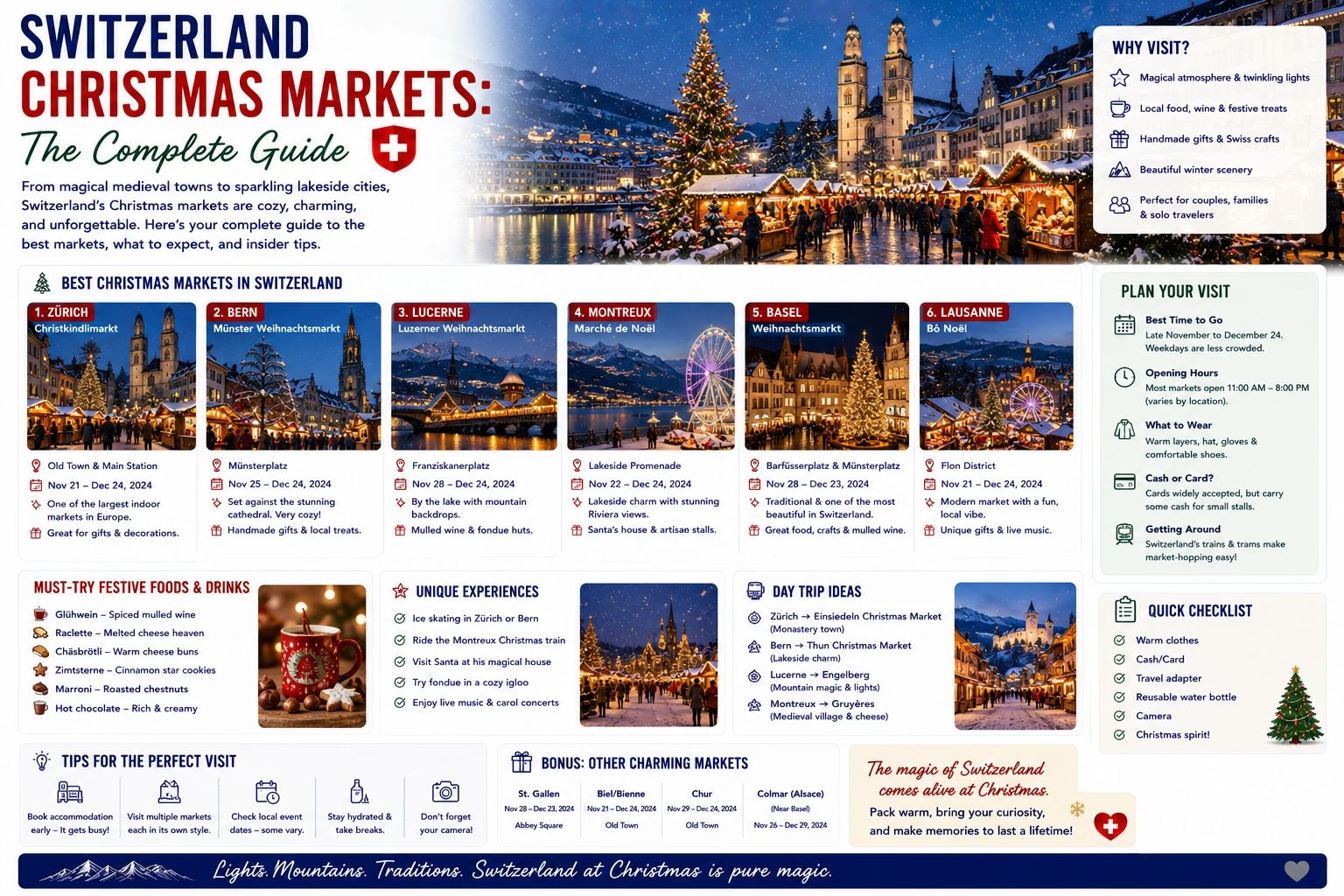
Switzerland’s Christmas markets are among the most atmospheric in Europe, combining the Germanic tradition of the Weihnachtsmarkt with the Swiss quality of urban setting. In 2026 the main city markets open around 19 November in Zürich and Geneva and run to 23 or 24 December, with Basel running from 26 November to 23 December. Each Swiss city’s market has a distinct character that reflects the city itself. Dates and opening hours change from year to year, so check the organiser’s website before you travel.
The Major Christmas Markets
Basel: Consistently rated among the best Christmas markets in Europe (it won an online “Best Christmas Market in Europe” vote in 2021). The market runs from 26 November to 23 December 2026 on Barfüsserplatz and Münsterplatz, with around 150 wooden chalets, and entry is free. It is younger than many visitors assume: the modern market began in 1978 on Claraplatz, moved to Barfüsserplatz in 1979, and only added Münsterplatz in 2011. The Münsterplatz market, beneath the red sandstone cathedral with a tree decorated by the designer Johann Wanner, has the more theatrical setting; Barfüsserplatz is livelier and larger, with a 13-metre Christmas pyramid as a meeting point. From Münsterplatz, walk to the Pfalz terrace for a view of the Rhine and the city lights.
Zürich: Zürich has several markets running at once, each with a different character, from about 19 November to 23 or 24 December. The indoor Christmas market inside the Hauptbahnhof (listed as Polarzauber for 2026), with over 100 stalls under the station hall’s glass roof, is one of the largest covered Christmas markets in Europe, and centres on a giant Christmas tree that is decorated by a different partner each year (historically with Swarovski crystals). On Sechseläutenplatz in front of the Opera House, the long-running Wienachtsdorf ended after 2025; in 2026 the site hosts a new market called Bellevue Noël, with a walk-in Advent wreath, market stalls, and a fondue chalet. The Dörfli market in the Niederdorf is the city’s oldest and is set among medieval lanes. The Singing Christmas Tree on Werdmühleplatz, where local choirs perform on a tree-shaped stage, has been a Zürich December tradition since 1998. Zürich’s markets are modest in scale next to Vienna or Munich, but they are strong on quality and especially on food.
Bern: The markets on Waisenhausplatz and Münsterplatz, beneath the Gothic cathedral and in the surrounding old town streets, are smaller than Zürich’s or Basel’s but have the most beautiful architectural setting. The Lauben (arcades) lined with Christmas decoration and the illuminated Münster above create an atmosphere specific to Bern. The markets open in stages from about 19 to 28 November and most close by 24 December, so check the city listing for each one. See our Bern city guide.
Lucerne: The main market is on Franziskanerplatz in the Old Town. Its dates are shorter than in most cities (3 to 21 December in 2026, and a separate Christmas park in Inseli-Park runs 20 November to 23 December, so check the organiser’s site), and it is set close to the lake and the city’s tourist infrastructure, so it is more international in character than the Bern or Basel markets.
Geneva: The main market, “Noël au Quai,” is on the lakeside Quai du Mont-Blanc from about 19 November to 24 December 2026, with over 100 chalets, a large fondue chalet, and a view of the Jet d’Eau across the bay. A second market, Noël aux Bastions, runs in the Parc des Bastions, and Carouge holds an artisan Christmas market on the weekend of 11 to 13 December, the same weekend as the Escalade festival. See our Geneva city guide.
Swiss Christmas Market Specialities
The foods of the Swiss Christmas market season are specific and worth seeking out:
Raclette: melted at stalls throughout the major markets; the classic pairing of potatoes, gherkins, and hot cheese made outdoors on cold evenings.
Glühwein (mulled wine): the standard warming drink; quality varies between stalls.
Basler Läckerli: Basel’s own spiced honey biscuit, baked in the city for centuries and sold throughout the Basel market and in the city’s confectioners.
Magenbrot: a dense, spiced gingerbread-like biscuit coated in sugar glaze, sold in paper bags at Swiss fairs and Christmas markets. An acquired taste that is worth acquiring.
Bratwurst with Bürli: grilled pork sausage with a round crusty roll; the market food that most Swiss actually eat.
Lebkuchen: German-style gingerbread, available at most markets but best at the artisan stalls that make their own.
Planning a Christmas Market Visit
The markets are busiest on Saturday afternoons and the weekends before Christmas. For the most atmospheric experience, arrive on a weekday evening after dark and plan to have at least two hours.
The Basel market is the one most worth making a special trip for from other Swiss cities. Basel is about an hour from Zürich by direct train and under three hours from Geneva.
Related: Visiting Switzerland in December | Winter and Skiing Hub | Plan Your Trip | Best Time to Visit
Written by Laura Meier. Updated regularly as prices and conditions change. Corrections and updates are welcome at contact@allaboutswiss.com.