
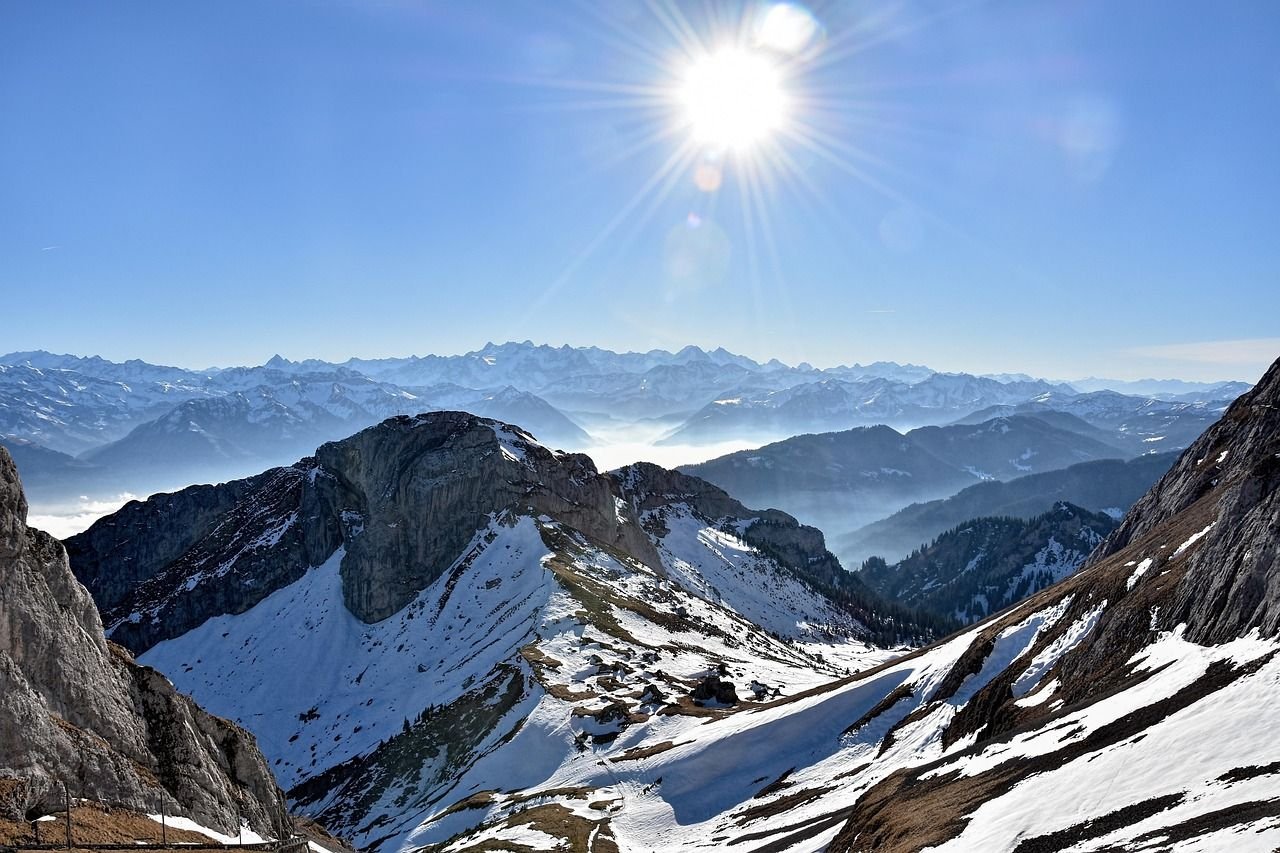
December is when Switzerland’s Christmas markets, early-season skiing, and festive train rides all overlap. It is also one of the busiest and most expensive months to visit. This guide covers what you can count on, what to book early, and where the details change from year to year. Dates and prices below were checked on 30 September 2026 for the 2026/27 season, and several resorts and markets had not yet published their final figures, so confirm with each organiser before you book.
Is December a Good Time to Visit?
It suits you if you want Christmas markets, snowy mountain scenery, and winter sports. Days are short, city temperatures typically range from about -2°C to 5°C, and mountain weather can change quickly, so pack warm layers and waterproof shoes. The trade-off is price: ski resorts are most expensive over Christmas and New Year, while city hotels are usually cheaper from January to March outside school holidays. Our Best Time to Visit guide compares every month.
Christmas Markets in 2026
The main city markets open between mid and late November and run until 23 or 24 December. Dates below are the organisers’ 2026 plans as of September.
- Zürich: the Christkindlimarkt in the main station (about 19 November to 24 December) has over 100 stalls under a giant Christmas tree. A new market, Bellevue Noël, replaces the long-running Wienachtsdorf on Sechseläutenplatz, and the Singing Christmas Tree on Werdmühleplatz hosts choirs through the season.
- Basel: 26 November to 23 December on Barfüsserplatz and Münsterplatz, with around 150 chalets and free entry.
- Geneva: “Noël au Quai” on Quai du Mont-Blanc (about 19 November to 24 December), a second market in the Parc des Bastions, and an artisan market in Carouge on 11 to 13 December.
- Lucerne: the market on Franziskanerplatz is shorter, roughly 3 to 21 December.
- Bern: markets on Waisenhausplatz and Münsterplatz. Check the exact dates with the organiser.
See our full Christmas Markets guide for what to eat and when to go. In Geneva, the Escalade festival takes place in December and commemorates the city’s defeat of a surprise attack by the Duke of Savoy’s troops in 1602.
Skiing in December
Early-season snow is not guaranteed at lower resorts, so higher and glacier areas are the safer choice at the start of the month.
- Zermatt: glacier skiing is due to open on 1 November 2026, and the Sunnegga-Rothorn and Gornergrat areas on 28 November. A one-day pass starts from CHF 89 on dynamic pricing.
- Jungfrau Ski Region (Grindelwald, Wengen, Mürren): the season is due to run from 21 November 2026 to 25 April 2027, with passes from CHF 79 and higher rates over Christmas and New Year.
- St Moritz and Davos Klosters: St Moritz day passes ranged from roughly CHF 89 to 115 depending on the date in current listings, and Davos was around CHF 86 in 2025/26. Davos had not published its 2026/27 tariffs when this was checked.
Our Ski Pass Costs guide explains how the pricing works, and the Best Ski Resorts guide compares the main areas.
Scenic Trains in Winter
The Glacier Express pauses each year between mid-October and early December, and in 2026 it is due to resume on 4 December. The journey between Zermatt and St Moritz takes about 8 hours, and a seat reservation (CHF 54 per person in 2026) is required on top of any ticket or pass. Many other panoramic railways run all winter, but check seasonal timetables before you plan around one.
Getting Around and Costs
- Trains and buses run reliably in winter and connect most cities and resorts. A Swiss Travel Pass in 2026 costs CHF 254 for 3 days, CHF 309 for 4 days, and CHF 399 for 6 days (2nd class), but it only pays off if you travel a lot, so work out the numbers using our Swiss Travel Pass guide. For longer stays, compare it with a Half Fare Card and Supersaver tickets.
- Zermatt is car-free. Park in Täsch and take the shuttle train, which takes 12 minutes and runs about every 20 minutes.
- Driving: winter tyres are not legally required but are expected, snow chains are compulsory where signposted, and many high mountain passes close for the winter. See our Getting Around guide.
- Booking: reserve accommodation early for Christmas, New Year, and ski resorts, where the peak weeks sell out first.
A Five-Day Plan for Markets and Mountains
- Day 1, Zürich: the station market, Bellevue Noël, and the Old Town. See our Zürich guide.
- Day 2, Basel: about an hour by train. Spend the day at the Barfüsserplatz and Münsterplatz markets.
- Day 3, Lucerne: under an hour from Zürich. Visit the Franziskanerplatz market and the lakefront. See our Lucerne guide.
- Day 4, Jungfrau region: take the scenic Luzern-Interlaken Express (about 2 hours) and spend a day skiing or on winter walks around Grindelwald or Wengen.
- Day 5, Geneva: about three hours from the Jungfrau region by train. Visit Noël au Quai and the Old Town. See our Geneva guide.
Staying Safe
Save these numbers: 112 for any emergency, 144 for an ambulance, 117 for police, 118 for fire, and 1414 for Rega, the Swiss air rescue service. Mountain weather and avalanche conditions change quickly in winter, so check forecasts before you head out. Our Safety guide and Mountain Weather checklist cover the basics.

I’m Laura, a travel writer based in Zürich, and Switzerland is the place I know better than anywhere else. I moved here 9 years ago and haven’t stopped exploring it since.
Over the past 9 years I’ve made 40+ trips across every Swiss canton — from the Italian-speaking south of Ticino to the remote valleys of Graubünden to the lake towns of Romandy. I speak German, French and English fluently, which means I can read the local newspapers, argue with train conductors, and actually understand what the mountain guide is telling you when the weather turns.
Switzerland is a deceptively complex destination: four languages, 26 cantons, wildly different regional cultures, and a transport network so intricate it takes years to properly understand. I write to demystify all of it — whether you’re planning your first visit to Zermatt, deciding between Zürich and Geneva for a city break, or figuring out how to live here as a digital nomad or remote worker.
I also cover Central Europe for travellers who want to venture beyond the obvious — particularly the Czech Republic, Austria and the Alpine arc connecting Switzerland to its neighbours.
All About Swiss is my home base, where I publish in-depth guides to Swiss travel, life and culture. If it involves Switzerland, I’ve probably written about it, or I’m about to.