
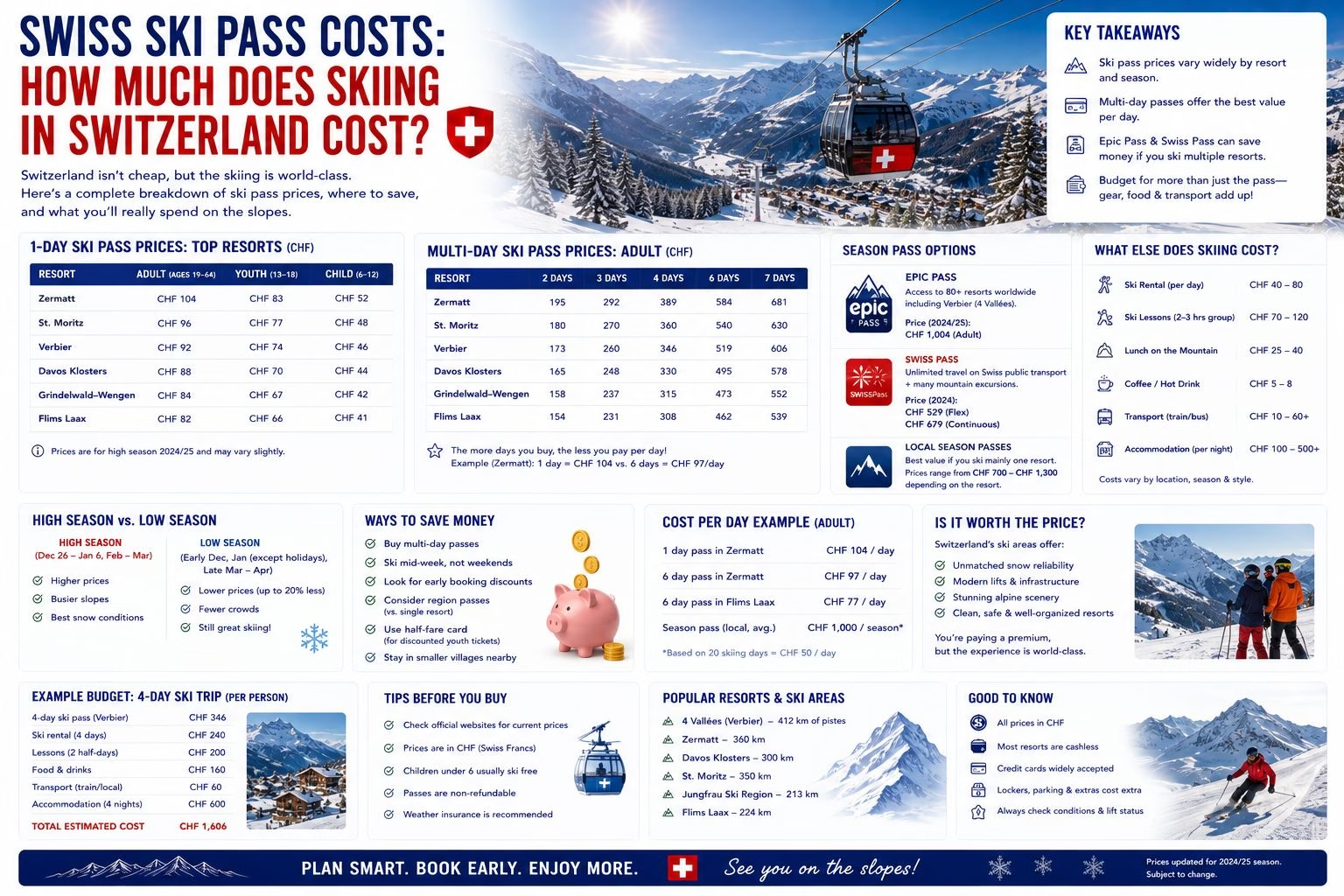
Swiss ski resort lift passes are among the most expensive in Europe, and prices now move more than they used to. Zermatt sells its ski passes on dynamic pricing, and the Jungfrau Ski Region charges higher rates in peak weeks. Knowing how the pricing works before you book is the most useful financial preparation for a Swiss ski trip. Prices below were checked on the resorts’ own websites in September 2026; where a resort has not yet published its 2026/27 tariff, the page says so.
Adult Day Pass Prices: What to Expect
All prices are in Swiss Francs (CHF) per adult. Most resorts now quote “from” prices, meaning the lowest rate on offer, and charge more in peak weeks such as Christmas, New Year, and the February holidays.
Zermatt (2026/27): A one-day pass starts from CHF 89, with a half-day pass (from about 12:15 pm) from CHF 68. Prices are dynamic: the lowest rates apply in early season (1 to 27 November) and late April, and the price can rise with demand and weather, so booking early usually gets the best price. Adding the Italian side (Cervinia) costs more, with a one-day international pass from CHF 104.
Jungfrau Ski Region (Grindelwald, Wengen, Mürren; 2026/27): Ski passes start from CHF 79. Since the 2025/26 season the region has charged higher peak-season rates in the Christmas and New Year period and from late January to early March.
Davos Klosters: The official ticket page currently lists an adult day ticket for all areas at CHF 94 (CHF 87 for Parsenn and Jakobshorn only, CHF 69 for Rinerhorn, CHF 54 for Pischa and CHF 73 for Madrisa), up from around CHF 86 in 2025/26. The page does not label the season, so confirm the 2026/27 price on the resort website before you book. Multi-day regional passes cost CHF 171 for 2 days and CHF 427 for 7 days.
Smaller and mid-sized resorts elsewhere in the country are usually cheaper, often in the CHF 55 to 70 range for a day pass, which is one reason they suit beginners and families. See our guide to Swiss ski resorts for beginners.
Multi-Day Passes: The Better Value Option
Multi-day passes almost always cost less per day than single days, and the saving grows with the length of the stay. At Zermatt in 2026/27, for example, a three-day pass starts from CHF 209 (about CHF 70 per day, roughly 20 percent below the one-day price), and a six-day pass from CHF 384 (CHF 64 per day).
Some resorts also sell Flex passes, which let you choose a set number of days within a longer window (Zermatt’s Flex pass, for example, offers 3 days within 5 from CHF 256). These suit trips with rest days or weather buffers.
Season passes are worth pricing if you will ski more than a couple of weeks at the same area. Zermatt’s season pass starts from CHF 1,750 (the lowest, early-purchase rate), which is roughly 20 days at its cheapest day-pass price. Many resorts run an advance sale that ends in mid-December, so check the resort’s site early.
Most passes load onto a resort card or a smartphone ticket. Unused days are generally non-refundable, so consider ski pass insurance if you are travelling in peak season.
The Swiss Travel Pass and Ski Lifts
The Swiss Travel Pass does not cover ski lift passes, and it does not give a general discount on them. Ski lifts are commercial mountain transport, separate from the public transport network. The pass does cover the trains and buses that take you to many resorts, including the routes to Zermatt, Grindelwald and Wengen, and Davos and St Moritz.
Some resorts and SBB’s RailAway offers combine a train ticket with a discounted lift pass, and the Jungfrau Ski Region offers a discounted Jungfraujoch “Top Ticket” to anyone holding a multi-day ski pass (CHF 63 return in the 2025/26 season, against a normal fare of over CHF 200; check the 2026/27 price). These are separate deals with their own conditions, so check the resort site or sbb.ch before you buy.
Reducing the Cost
Book early and online: Buying on the resort’s website is almost always cheaper than the ticket window, and at resorts with dynamic pricing (Zermatt) early bookings get the lowest rates. Some resorts also sell discounted early-season and spring passes; the Zermatt lowest-price periods for 2026/27 are 1 to 27 November and 19 April to 2 May.
Ski off-peak: Christmas, New Year, and the February school holidays are the most expensive weeks by a wide margin. Mid-January and March are usually cheaper.
Half-day passes: Most resorts sell afternoon passes at a clear discount to a full day (Zermatt’s half-day pass starts from CHF 68 against CHF 89 for a full day, so it saves less than you might expect). They pay off if you arrive late or only want a few hours.
Reload your card: Many resorts let you load a new ticket onto a card you already own, which avoids the card deposit.
Stay outside the resort village: Accommodation in a nearby valley town, such as Täsch or Visp for Zermatt or Interlaken for the Jungfrau region, is often noticeably cheaper than in the resort itself. Check the last train times before you commit, especially for après-ski.
Children’s Lift Passes
Children’s rules vary a lot by resort, so check the specific resort before you book. Some examples for 2026/27: at Zermatt, children under 9 ski free, ages 9 to 15 pay half price, and on Saturdays children up to 15 ski free; at Davos Klosters, children under 6 ski free with a parent or instructor. Many resorts also run family deals and free Saturday days for children, so check the resort’s family page.
Children travelling free on public transport with a parent’s Swiss Travel Pass applies to trains and buses only, not to lift passes.
Related: Winter and Skiing Hub | Best Ski Resorts | Swiss Travel Pass | Plan Your Trip
Written by Laura Meier. Updated regularly as prices and conditions change. Corrections and updates are welcome at contact@allaboutswiss.com.