
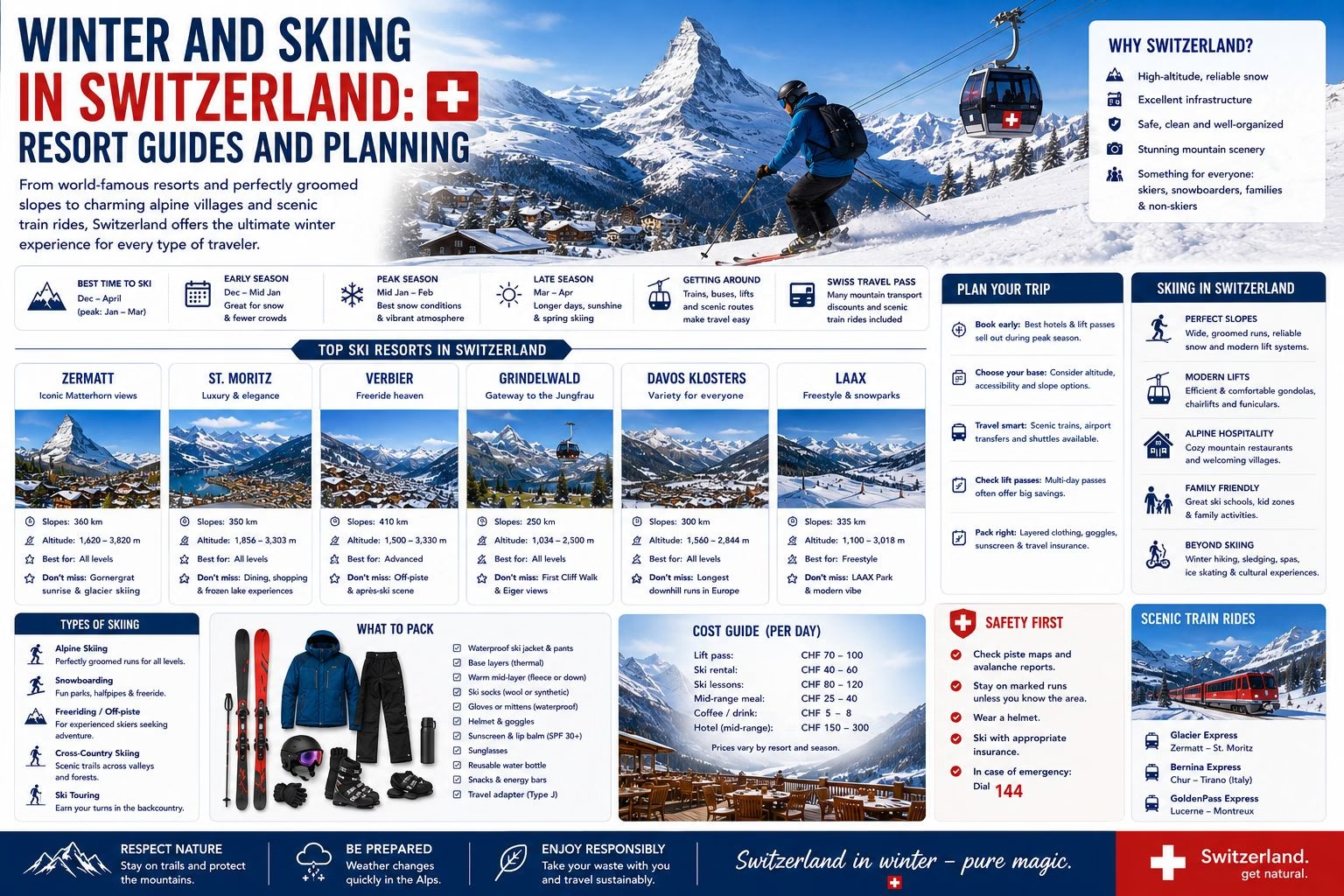
Switzerland has around 200 ski areas, ranging from small local hills to large interconnected areas such as the Verbier 4 Vallées and Zermatt with its link to Cervinia in Italy. Choosing between them depends on your skiing level, budget, preference for resort character (cosmopolitan, traditional, or family-oriented), and the type of terrain you want. This guide covers the major options with enough detail to make a real comparison. For current lift pass prices, see our ski pass costs guide.
The Tier 1 Resorts: International Reputation and Full Infrastructure
Zermatt: The most recognisable Swiss ski destination and one of the most expensive. The combination of the Matterhorn backdrop, a car-free village, high-altitude skiing up to 3,883 metres at the Matterhorn Glacier Paradise, and the link to the Italian resort of Cervinia makes it a bucket-list resort. The ski area covers up to about 200 kilometres of pistes on the Swiss side, and around 360 kilometres including the Italian side; it suits all levels. Price tier: a one-day pass starts from CHF 89 in 2026/27 on dynamic pricing, and accommodation is among the highest in the Alps. Full guide: Zermatt skiing.
Verbier: The most fashionable of the Swiss resorts, and the centre of the largest ski area entirely within Switzerland. As part of the 4 Vallées (connected with Nendaz, Veysonnaz, Thyon, La Tzoumaz, and Bruson), Verbier gives access to a claimed 410 kilometres of marked runs. The terrain suits advanced and expert skiers, with famous freeride routes and the Mont-Fort sector above 3,300 metres. The après-ski scene is one of the liveliest in Switzerland. Full guide: Verbier skiing.
St Moritz: The oldest and most aristocratic Swiss ski resort. St Moritz hosted the Winter Olympics twice (1928 and 1948) and has been a playground of European wealth since the 1860s. The Corviglia ski area, which reaches 3,057 metres at Piz Nair, has good intermediate terrain; the Diavolezza and Corvatsch areas add more demanding and more scenic options. Price tier: comparable to Zermatt. Full guide: St Moritz skiing.
Davos Klosters: Davos, at around 1,560 metres and home to about 11,000 people, is one of the highest towns in Europe, and it gives access to five separate ski areas (Parsenn, Jakobshorn, Rinerhorn, Pischa, and Madrisa) linked by buses and trains. The Parsenn area is the largest of the five; the Jakobshorn above Davos is popular with snowboarders and freestyle skiers; Klosters keeps a more traditional village character. Davos has excellent rail connections and a major conference centre, which makes it practical for ski trips combined with business travel. Full guide: Davos and Klosters.
The Tier 2 Resorts: Excellent Skiing, More Accessible Pricing
Grindelwald, Wengen, and Mürren (Jungfrau Ski Region): The interconnected ski area in the Bernese Oberland is Switzerland’s most scenically dramatic, with the Eiger North Face in view for much of the day. The region has about 211 kilometres of slopes, which suit intermediate skiers best; the Männlichen area is excellent for families, and the Schilthorn above Mürren has more demanding runs with extraordinary views. Lift passes start from CHF 79 in 2026/27, somewhat below Zermatt, with higher rates in peak weeks. Full guide: Grindelwald skiing.
Laax (Graubünden): The most progressive Swiss ski resort, with a strong freestyle culture and one of Europe’s best-known snowparks and pipes. The wider Flims-Laax-Falera ski area has more than 200 kilometres of wide, well-groomed pistes that suit intermediate carving. The resort village at Laax has been redesigned with contemporary architecture that contrasts with the traditional Alpine style of most Swiss resorts, which some visitors love and others do not.
Engelberg (Central Switzerland): About 90 minutes from Zürich, with skiing up to the Titlis glacier area at 3,020 metres and some of the best off-piste in central Switzerland. Prices are competitive for the quality of the terrain, and it is a good choice for day trips or short breaks from Zürich or Lucerne. The Titlis Rotair, the world’s first revolving cable car, is an attraction in itself.
Saas-Fee (Valais): A car-free village with a more traditional character than Zermatt, and a glacier ski area that reaches about 3,500 metres. Snow conditions are reliable through the winter, and prices are lower than in Zermatt (a one-day pass was CHF 83 in 2025/26). Summer glacier skiing normally runs from mid-July to late October, but it depends on glacier conditions: in 2026 it was cut short by the summer melt, with only the upper lifts due to reopen from 3 October. It is an underrated alternative to Zermatt for high-altitude skiing.
The Best Resorts for Beginners
See the dedicated beginners guide for the full analysis. In brief: Grindelwald and Wengen for accessible terrain with easy access from Interlaken; Laax for the quality of its ski schools; and Andermatt for its investment in beginner infrastructure and its quieter atmosphere compared with the major resorts.
Related: Winter and Skiing Hub | Zermatt Skiing | Verbier Skiing | Ski Pass Costs | Best Time to Visit
Written by Laura Meier. Updated regularly as prices and conditions change. Corrections and updates are welcome at contact@allaboutswiss.com.